

Research notes

Eloralintide vs Retatrutide: Amylin Agonist vs Triple Agonist Compared

Eloralintide is Eli Lilly's investigational, selective amylin receptor agonist for obesity; retatrutide is Lilly's investigational triple agonist that activates the GIP, GLP-1 and glucagon receptors instead. In eloralintide's 48-week phase 2 trial of 263 adults, mean body weight fell by up to 20% against 0.4% with placebo; in retatrutide's separate 338-person phase 2 trial, it fell by up to 24.2% at 48 weeks. Eloralintide has no published phase 3 results: its two phase 3 trials, ENLIGHTEN-1 and ENLIGHTEN-2, were both still recruiting as of September 2026, with primary completion not due before 2028. Neither compound has EU or US approval, and Peptyds does not supply eloralintide.

11 min readUpdated 24 Sept 2026Reviewed by Independent EU laboratory (ISO/IEC 17025)
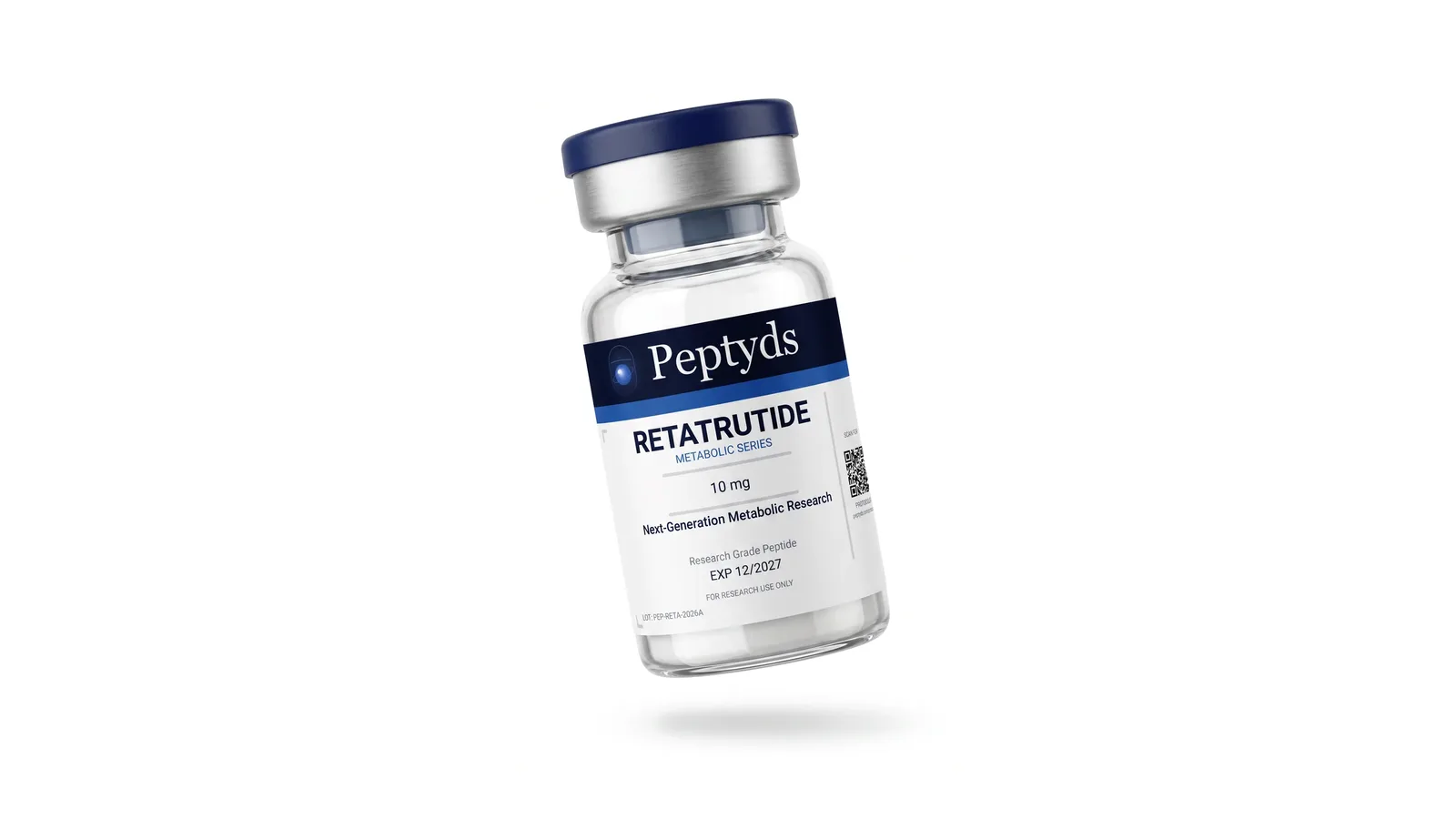
A Peptyds retatrutide research vial photographed on a white background.
Jump to section
  1. 01What is eloralintide?
  2. 02Eloralintide vs retatrutide: what is the mechanism difference?
  3. 03What have eloralintide's phase 1 and phase 2 trials shown?
  4. 04How does the retatrutide evidence compare with eloralintide's?
  5. 05Where do other amylin-pathway compounds fit?
  6. 06What side effects and cardiovascular signals have appeared so far?
  7. 07Is eloralintide approved, and when might phase 3 data arrive?
  8. 08How Peptyds frames this comparison
  • Eloralintide is a selective amylin receptor agonist; retatrutide is a triple agonist of the GIP, GLP-1 and glucagon receptors — the two act on entirely different hormone systems.
  • Eloralintide's 48-week phase 2 trial in 263 adults reported mean weight change of -9% to -20% across doses, against -0.4% with placebo; retatrutide's 48-week phase 2 trial in 338 adults reported up to -24.2%, against -2.1%.
  • Eloralintide has completed phase 1 and phase 2 trials but has no published phase 3 data; its phase 3 trials, ENLIGHTEN-1 and ENLIGHTEN-2, are recruiting, with primary completion not expected before 2028.
  • Early data suggest eloralintide lowers pulse rate rather than raising it, unlike the dose-dependent heart-rate increase reported with retatrutide, but the evidence for both is still limited to short, small trials.
  • Neither compound has EMA or FDA authorisation, and Peptyds supplies only retatrutide as a research peptide; it does not supply eloralintide.

Discussed in this guide

  • RetatrutideA triple agonist peptide targeting GIP, GLP-1, and glucagon receptors — studied in advanced metabolic and weight-regulation contexts.10 mg · 60 mg€4.32 / mg

What is eloralintide?

Eloralintide (development code LY3841136) is an investigational peptide developed by Eli Lilly that selectively activates the amylin receptor. Discovery-stage work described it as preferentially activating the human amylin 1 receptor (AMY1R), with roughly 12-fold selectivity over the calcitonin receptor and 11-fold over the amylin 3 receptor (AMY3R), and reported that it produced significantly less conditioned taste avoidance in rats than cagrilintide, a non-selective amylin receptor agonist. In diet-induced obese rats, it dose-dependently reduced food intake and lowered body weight, primarily through fat-mass loss.[1]

The molecule was engineered for once-weekly subcutaneous dosing. Its first human trial was a single-ascending-dose study in 48 healthy participants with a mean BMI of 27.5, in which most reported adverse events were mild; a later 12-week, multiple-ascending-dose phase 1 trial enrolled 100 participants with obesity or overweight to characterise its safety, pharmacokinetics and early weight effects without dose escalation.[1][2]

Continue reading:Read the complete retatrutide guide

Eloralintide vs retatrutide: what is the mechanism difference?

The two molecules do not share a receptor. Amylin is a hormone co-secreted with insulin from pancreatic beta cells that slows gastric emptying, suppresses glucagon secretion and promotes meal termination through central mechanisms; eloralintide works by selectively activating its receptor, AMY1R. Retatrutide does not touch the amylin pathway at all — it activates the GIP, GLP-1 and glucagon receptors instead, a different hormone family entirely.[5][10]

Amylin receptors are themselves a composite: the calcitonin receptor paired with a receptor-activity-modifying protein (RAMP), a heterodimeric structure that gave rise to a family of amylin analogues after the first approved agent, pramlintide. Later long-acting entrants took different design paths — cagrilintide is a non-selective dual amylin/calcitonin-receptor agonist, later co-formulated with semaglutide as CagriSema, while amycretin combines amylin-, calcitonin- and GLP-1-receptor activity in one molecule. Eloralintide's discovery work emphasised receptor selectivity instead, aiming for AMY1R activity with comparatively little action elsewhere.[4]

What have eloralintide's phase 1 and phase 2 trials shown?

In the 12-week phase 1 trial, 100 participants with a mean age of 44 and mean BMI of 32.6 received eloralintide or placebo across five dose cohorts without dose escalation. The most common treatment-emergent adverse events were decreased appetite (19%), headache (12%) and fatigue (11%); gastrointestinal events were less frequent, with diarrhoea in 10%, nausea in 8% and vomiting in 4%. At week 12, the least-squares mean reduction in body weight ranged from 2.6% to 11.3% across dose groups, and no deaths occurred.[2]

The pivotal phase 2 trial, published in The Lancet in December 2025, randomised 263 adults with obesity or overweight and at least one weight-related condition, without diabetes, to weekly eloralintide at 1, 3, 6 or 9 mg, to dose-escalation schedules of 6-9 mg or 3-9 mg, or to placebo, for 48 weeks. Mean body weight change at 48 weeks ranged from -9% at the lowest dose to -20% at 9 mg and at the 6-9 mg escalation, against -0.4% with placebo.[3]

Tolerability tracked how each dose was reached rather than being uniformly low: nausea was reported by 11-13% of participants at 1 and 3 mg but by 64% at the fixed 6 mg dose, falling to 25% with the slower 3-9 mg escalation; fatigue followed a similar pattern, from 0% at 1 mg to 43-46% at 9 mg and the 6-9 mg escalation. The trial's own reading was that slower dose escalation improved tolerability at a given final dose.[3]

How does the retatrutide evidence compare with eloralintide's?

Retatrutide's own phase 2 obesity trial randomised 338 adults without diabetes to weekly doses of 1-12 mg or placebo for 48 weeks; mean body weight fell by up to 24.2% at the top dose, against 2.1% with placebo. Its first peer-reviewed phase 3 result, in type 2 diabetes, reported weight reductions of up to 15.3% at 40 weeks.[11][12]

Placing the two phase 2 headline figures side by side, retatrutide's 24.2% against eloralintide's 20%, is tempting and unreliable. The trials differ in mechanism, in how doses were escalated, and in population size (338 versus 263), and were run by different investigator networks; no head-to-head trial between the two exists, and a comparison that ignores those differences is not evidence, it is arithmetic.[11][3]

The clearer difference is in trial phase. Retatrutide has a published phase 3 result in type 2 diabetes and phase 3 obesity trials registered as completed. Eloralintide has not reached that point: both of its phase 3 trials, ENLIGHTEN-1 (without type 2 diabetes) and ENLIGHTEN-2 (with type 2 diabetes), were recruiting as of September 2026, and their registry entries list primary completion no earlier than January 2028. No phase 3 data for eloralintide has been published.[12][8][9]

Continue reading:Read Retatrutide vs Tirzepatide

Where do other amylin-pathway compounds fit?

Eloralintide is one of several long-acting amylin-pathway compounds now in development, and cross-trial context helps place it. A 2026 network meta-analysis of six trials (4,642 participants, 12 to 68 weeks) ranked high-dose amycretin as producing the largest placebo-adjusted weight change (-23.95%), followed by high-dose eloralintide (-18.01%) and high-dose CagriSema, a cagrilintide-semaglutide combination (-17.18%); all three outranked semaglutide 2.4 mg (-11.45%) in the same indirect comparison. Gastrointestinal adverse events were more common with the high-dose amylin-pathway agents, and only high-dose CagriSema raised the rate of stopping treatment for adverse events; the review's authors described the underlying evidence as sparse and low-certainty. Cagrilintide and amycretin are separate compounds, not supplied by Peptyds and not detailed further here.[6]

What side effects and cardiovascular signals have appeared so far?

Across eloralintide's phase 1 and phase 2 trials, the pattern of adverse events differed from the gastrointestinal-dominant profile typical of GLP-1 and multi-agonist peptides: decreased appetite, headache and fatigue were the most common early signals, and gastrointestinal events, while present and dose-related, were not the leading complaint at lower doses. Retatrutide's trials, by contrast, report gastrointestinal effects, mainly nausea, diarrhoea, vomiting and constipation, as the dominant and dose-related adverse events.[2][3][11]

The two molecules also diverge on heart rate. Retatrutide's phase 2 trial reported a dose-dependent rise in heart rate that peaked at 24 weeks. A 2026 literature review of eloralintide's early clinical studies instead described reductions in pulse rate, alongside lower blood pressure, inflammatory markers and improved lipid parameters — a pattern its authors called potentially distinct from the heart-rate increase associated with GLP-1 receptor agonists. The same review was explicit about the limits of that evidence: it rests on preclinical, phase 1 and phase 2 studies with small samples and short follow-up, and no amylin receptor agonist, eloralintide included, has yet been tested in a dedicated cardiovascular-outcomes trial.[11][7]

Is eloralintide approved, and when might phase 3 data arrive?

No. Eloralintide is an investigational compound with no marketing authorisation anywhere. As of September 2026, the European Medicines Agency's database of authorised medicines lists no eloralintide product, and no regulatory filing has been made.[13]

Its development programme is active and broad: alongside the two pivotal phase 3 obesity trials, Lilly has registered phase 3 studies in knee osteoarthritis with obesity and in obstructive sleep apnoea with obesity, plus phase 1 studies in renal and hepatic impairment and in combination with tirzepatide, most recruiting or ongoing as of September 2026. None of these has reported results.[8][9]

For readers tracking the timeline: ENLIGHTEN-1 and ENLIGHTEN-2 list primary completion dates of March 2028 and January 2028. Retatrutide reached its first published phase 3 result about three years after its phase 2 publication. On a similar timeline, eloralintide's first phase 3 read-out would not be expected before its registered completion dates, and this guide will be updated when one is published.[11][12][8][9]

Continue reading:Read the GLP-1 peptides overview

How Peptyds frames this comparison

Peptyds supplies retatrutide as a lyophilised research peptide for in-vitro laboratory work, with the batch documentation described on our quality page. Peptyds does not supply eloralintide. Neither product is a medicine, neither is intended for human or veterinary use, and nothing on this page describes how a person should use either compound.

The evidence records differ in stage. Retatrutide has published phase 1, phase 2 and a first phase 3 trial, with further phase 3 obesity trials registered as completed but without peer-reviewed results at the time of writing, and no EU marketing authorisation. Eloralintide has published phase 1 and phase 2 trials only, two phase 3 trials still recruiting, and no EU or US authorisation. Research interest in both molecules is legitimate; consumer weight-loss claims for either are not supported by either record.[11][12][3][8][13]

Continue reading:View RetatrutideRead the quality protocol

Sources

  1. [01]
  2. [02]
  3. [03]
  4. [04]
  5. [05]
  6. [06]
  7. [07]
  8. [08]
  9. [09]
  10. [10]
  11. [11]
  12. [12]
  13. [13]

Questions

What is eloralintide?

Eloralintide (LY3841136) is an investigational, once-weekly peptide developed by Eli Lilly that selectively activates the amylin receptor (AMY1R). It has completed phase 1 and phase 2 trials in obesity, and two phase 3 trials are recruiting.[1][3]

Is eloralintide the same as retatrutide?

No. Eloralintide is a selective amylin receptor agonist; retatrutide is a triple agonist of the GIP, GLP-1 and glucagon receptors. They come from the same company and the same obesity research programme, but act through entirely different hormone systems.[1][10]

Has eloralintide completed phase 3 trials?

No. As of September 2026, eloralintide's two phase 3 trials, ENLIGHTEN-1 and ENLIGHTEN-2, are both recruiting, with registered primary completion dates of March 2028 and January 2028. No phase 3 results for eloralintide have been published.[8][9]

Is eloralintide approved in the EU or the US?

No. Eloralintide has no marketing authorisation anywhere. The European Medicines Agency's database of authorised medicines lists no eloralintide product as of September 2026.[13]

How much weight loss did eloralintide show in its phase 2 trial?

In the 48-week phase 2 trial of 263 adults, mean body weight change ranged from -9% at the lowest dose to -20% at the highest fixed dose and dose-escalation arm, against -0.4% with placebo. Retatrutide's separate phase 2 trial reported up to -24.2% in a different population and dosing scheme, so the two figures should not be compared directly.[3][11]

What side effects were reported with eloralintide?

The most common were decreased appetite, headache and fatigue, with gastrointestinal events such as nausea, diarrhoea and vomiting also reported and linked to dose and escalation speed; nausea ranged from 11% at the lowest dose to 64% at a fixed 6 mg dose in the phase 2 trial. Most events were mild to moderate.[2][3]

Does eloralintide raise heart rate the way some GLP-1 medicines do?

Early data point the other way: a 2026 review of eloralintide's clinical studies reported reductions in pulse rate rather than an increase, unlike the dose-dependent heart-rate rise seen in retatrutide's trials. The review stressed that this comes from small, short phase 1 and phase 2 studies, with no dedicated cardiovascular-outcomes trial yet.[7][11]

Educational content. Not medical advice.

Next step

Choose the route that matches how you read.