

Cited peptide education with a direct route into quality and commerce.
Read about certificates of analysis, HPLC, storage, shipping, and research context in plain language, with sources and relevant next steps.
Peptide fundamentals
Start here. What peptides are, how the main families differ, and how to match a molecule to a goal before you compare products.

Goal-led shopping helps guided buyers compare research context, quality proof, and product fit without decoding every molecule first.

Peptides are short chains of amino acids — typically 2 to 50 — joined by peptide bonds. Smaller than proteins, larger than single amino acids.
Molecule guides & comparisons
Compound-by-compound research reviews and head-to-head comparisons — BPC-157, TB-500, the GH secretagogues, the GLP-1 class, GHK-Cu and more.
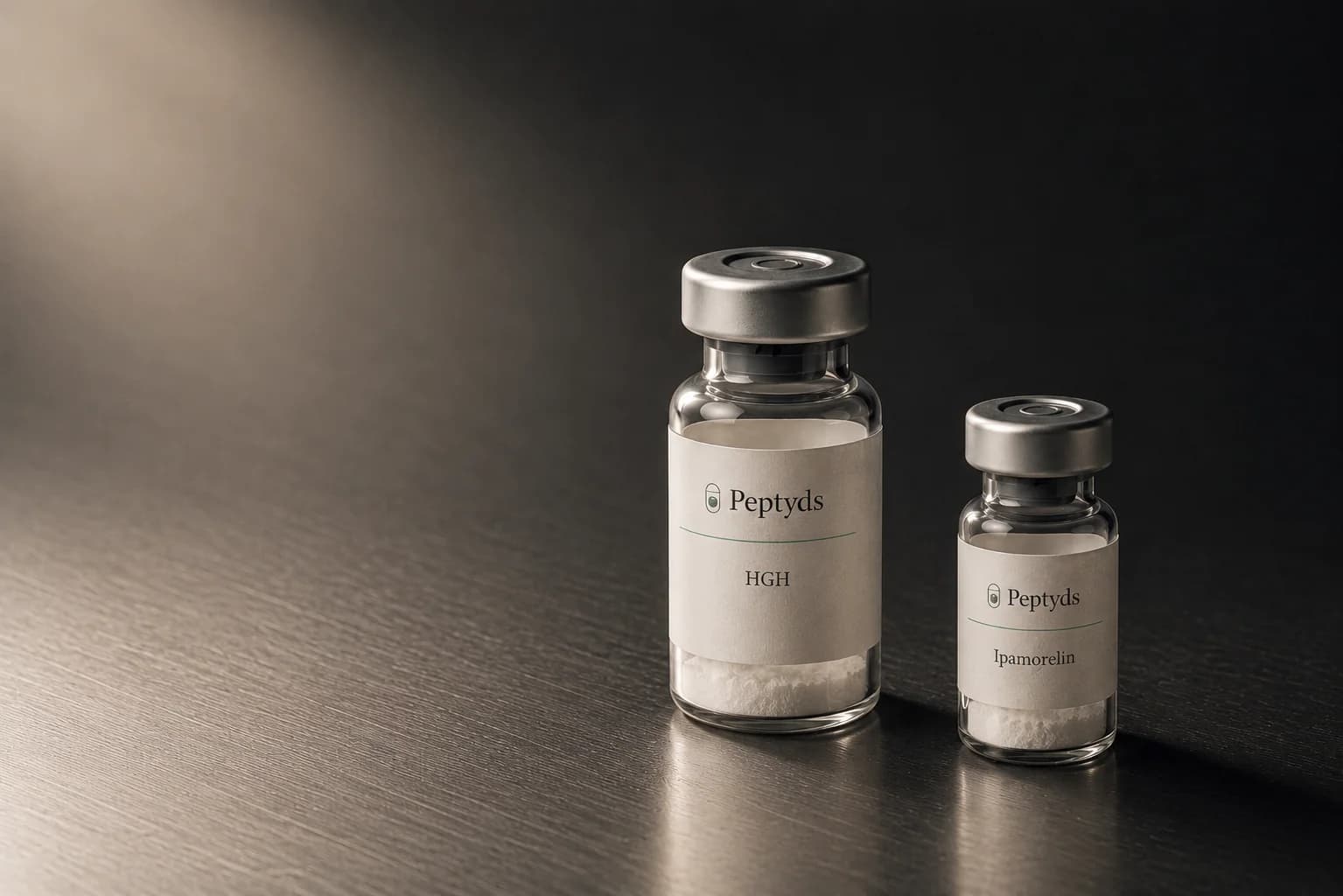
This is the question underneath the entire growth-hormone category, and most comparisons skip it: are you adding the hormone, or asking the body for more of its own?
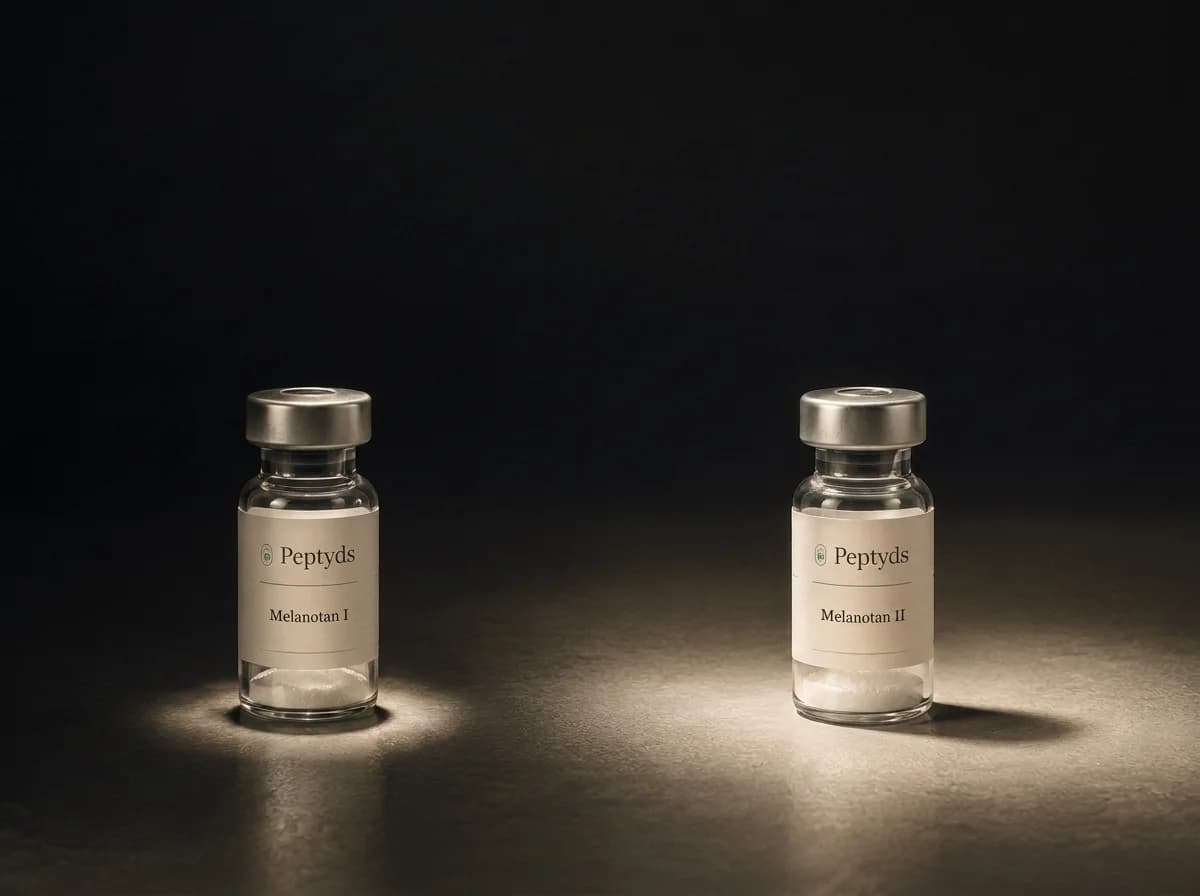
The numbering suggests a sequel. The pharmacology says otherwise: one binds narrowly, the other binds across a receptor family that governs far more than pigmentation.
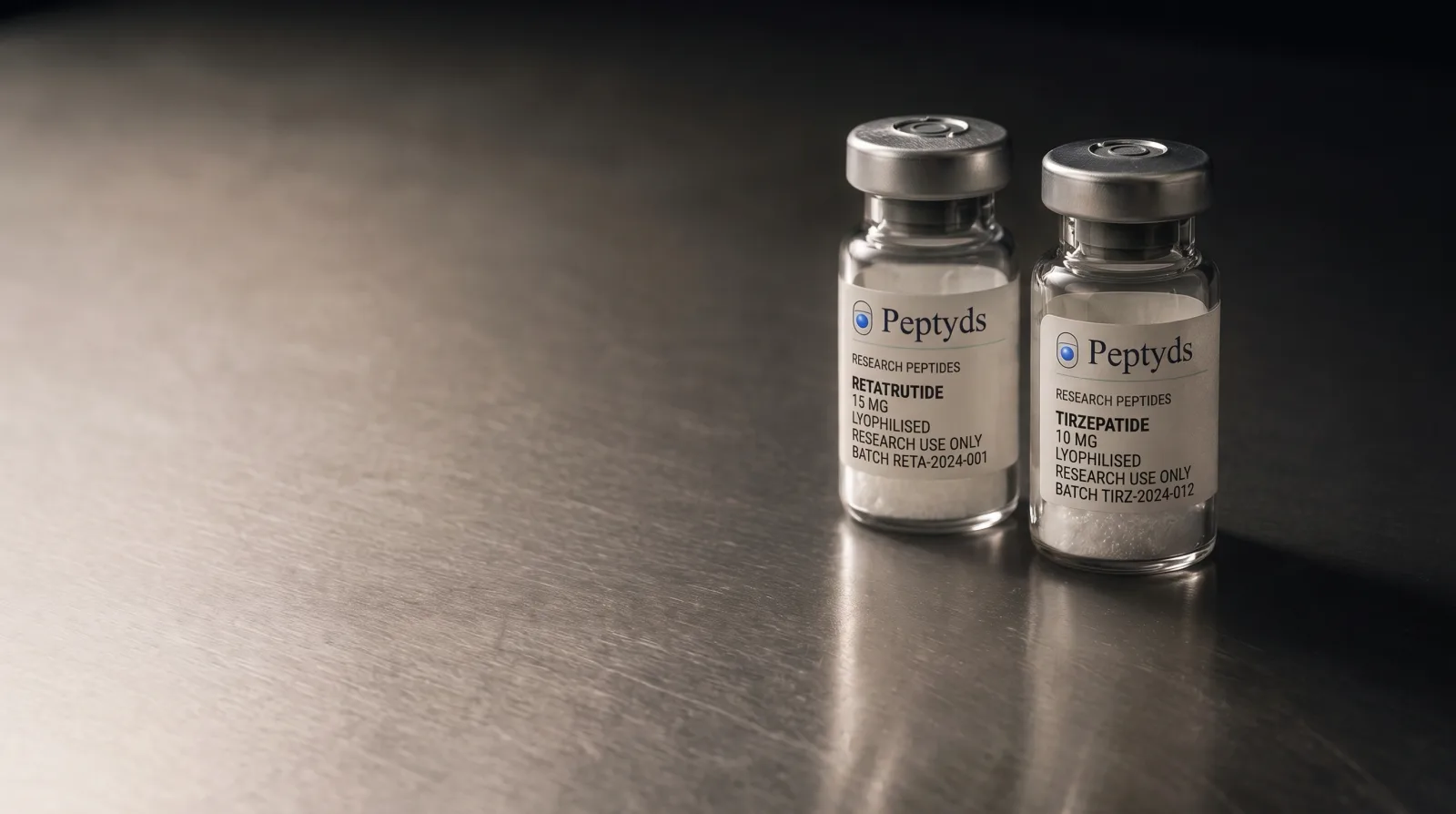
The two are usually compared on one number — how much weight came off. That number favours retatrutide, and it is also the least useful basis for choosing between them.
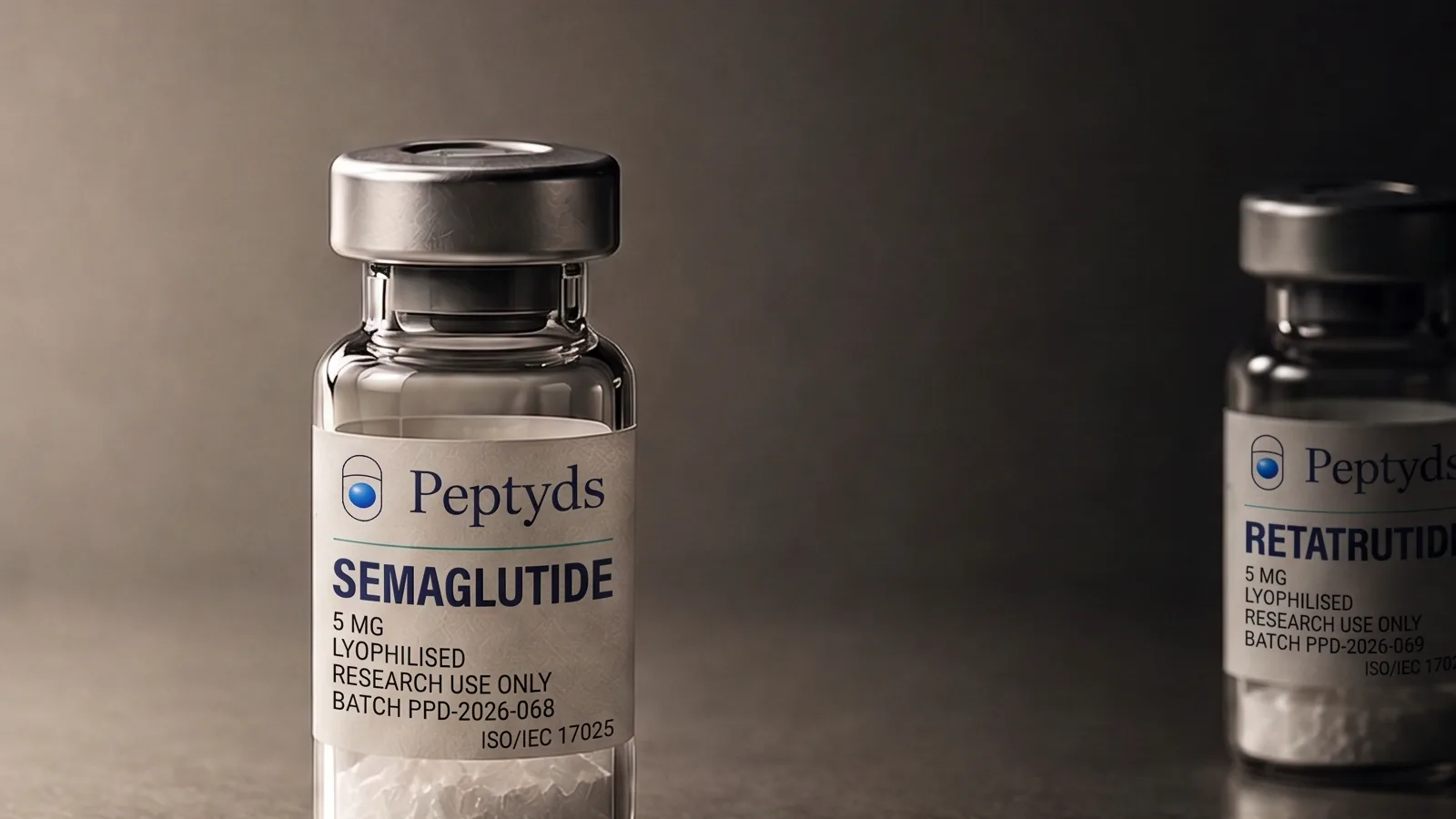
This pairing sets the widest gap in the GLP-1 family: one receptor against three, and a decade of authorised use against a single published phase 2 trial.
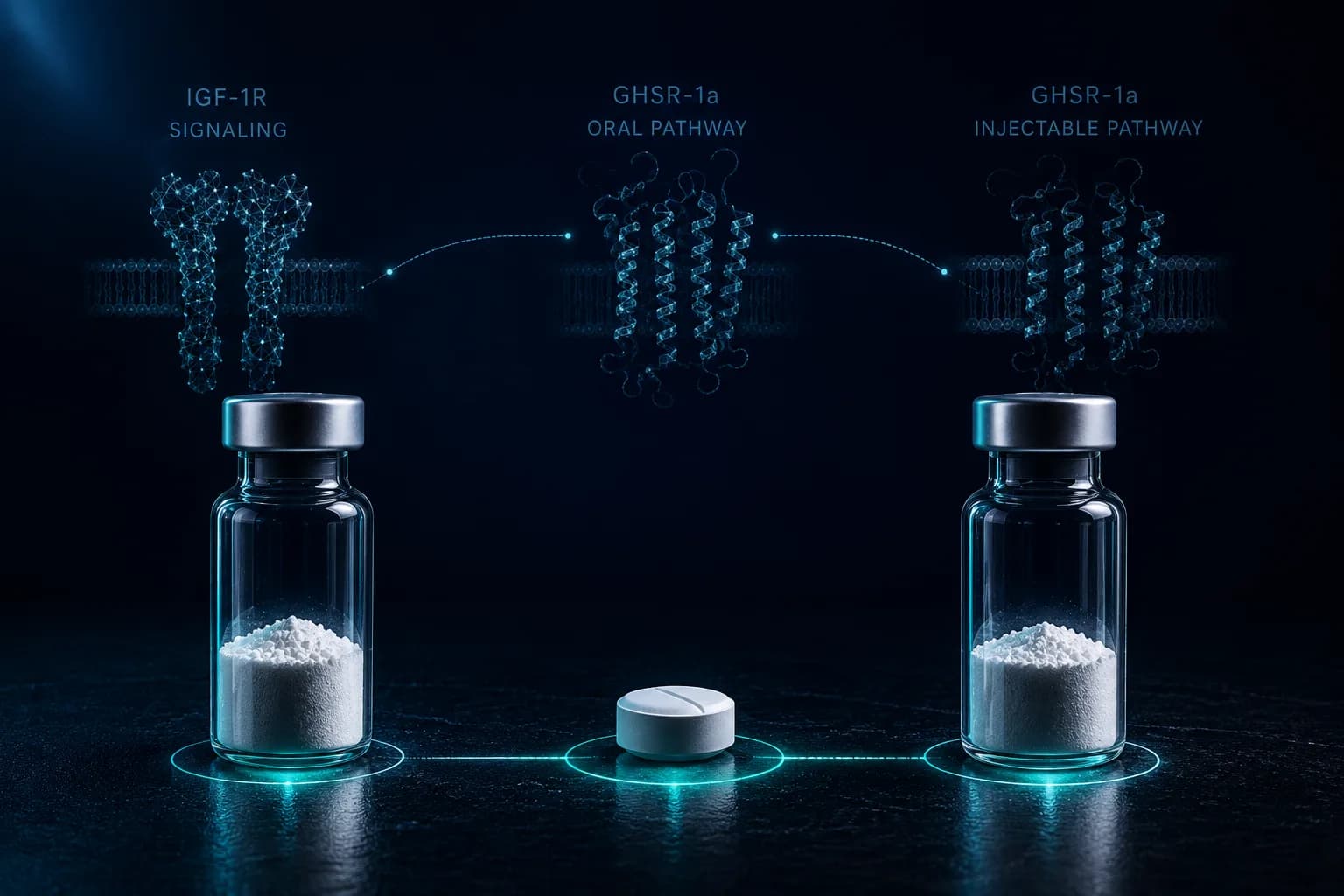
Three molecules that all touch the GH/IGF-1 axis, three completely different mechanisms, three very different evidence bases. The honest comparison is structural, not which-is-best.
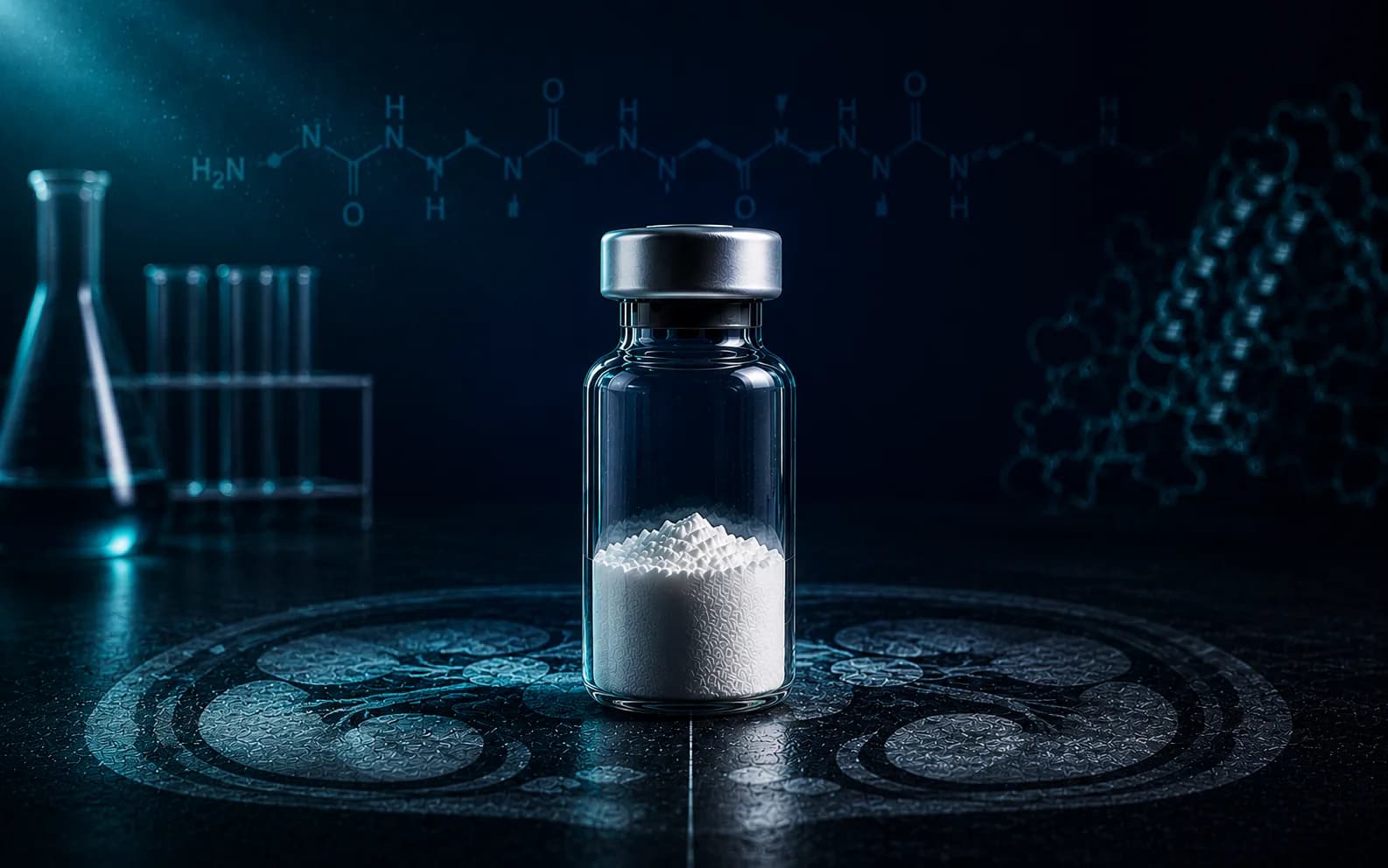
Tesamorelin is the rare GHRH analogue with a randomised-controlled-trial dataset behind it — but only in one specific clinical population. The honest version separates that data from the consumer marketing.
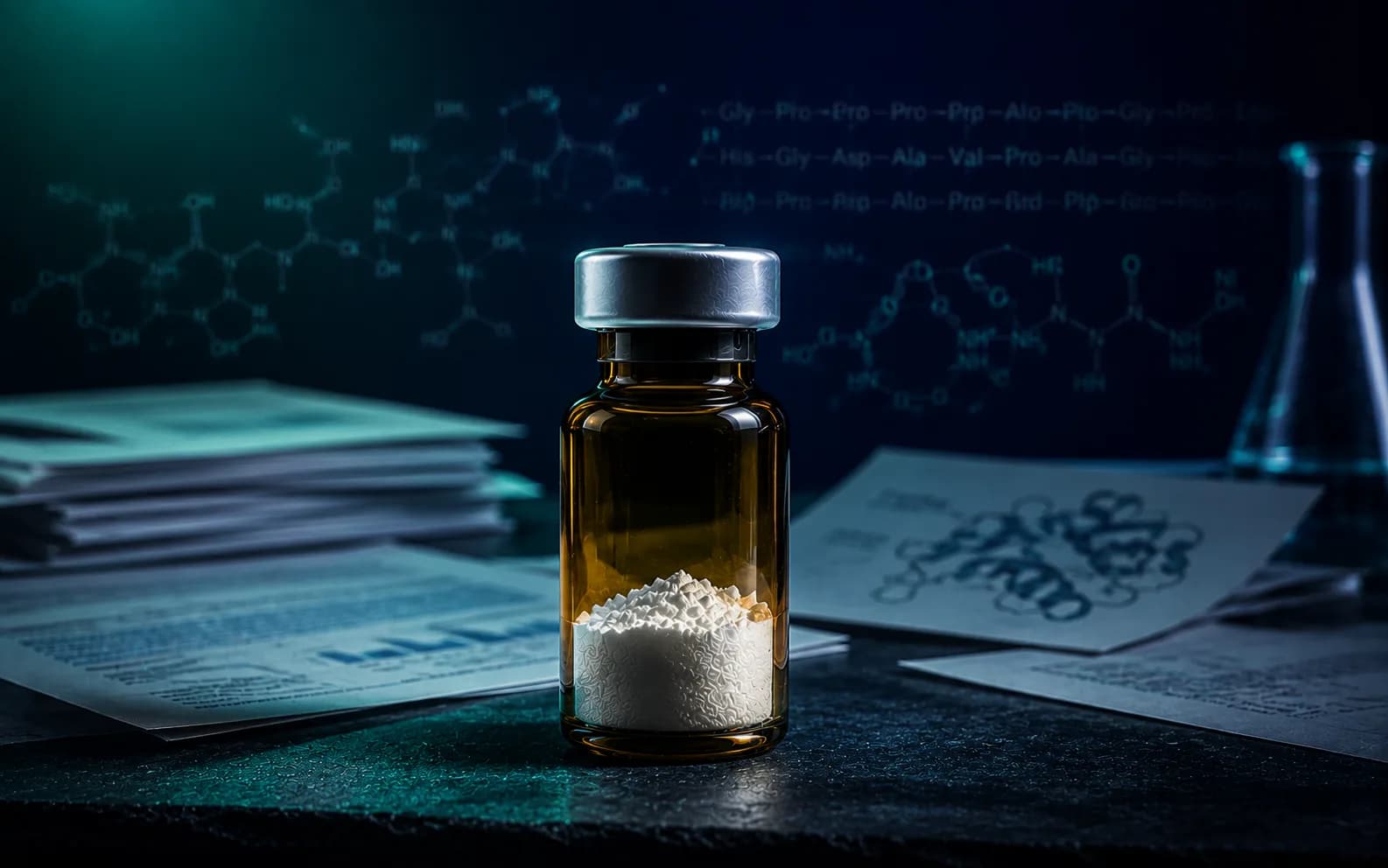
BPC-157 is one of the most-asked-about research peptides on the internet. The honest version of the story starts in a 1990s gastric-juice protein purification and ends with a regulatory map.

BPC-157 and TB-500 are two of the most-asked-about recovery research peptides. They have different sequences, different mechanism stories, and the same evidence honesty problem.

CJC-1295 and ipamorelin are talked about together because they hit two different parts of the growth-hormone axis. The interesting part of the comparison is mechanism, not which one is 'stronger'.
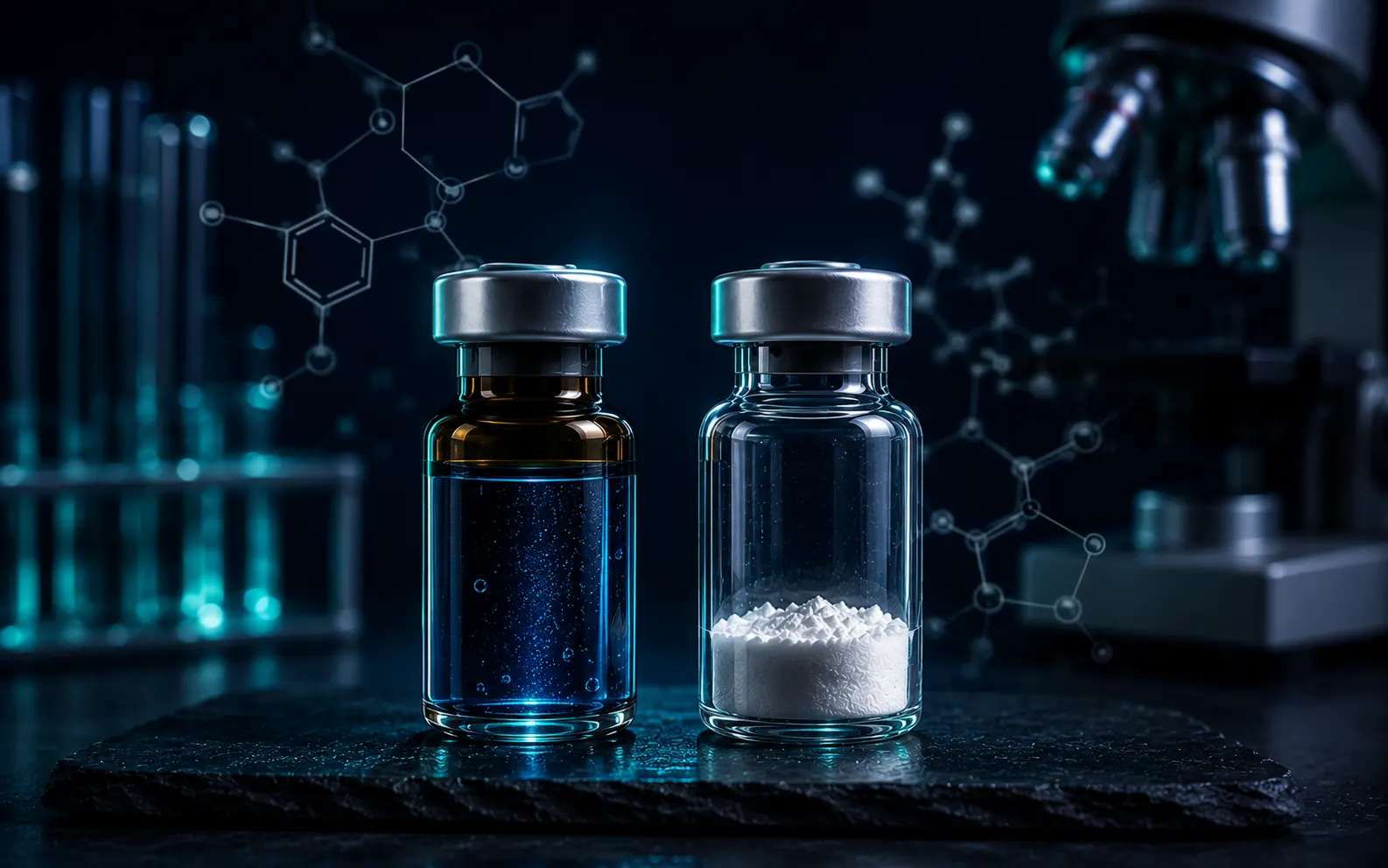
GHK-Cu and BPC-157 both show up in 'best peptide for skin' searches, but they sit in different research neighbourhoods and use different delivery routes.
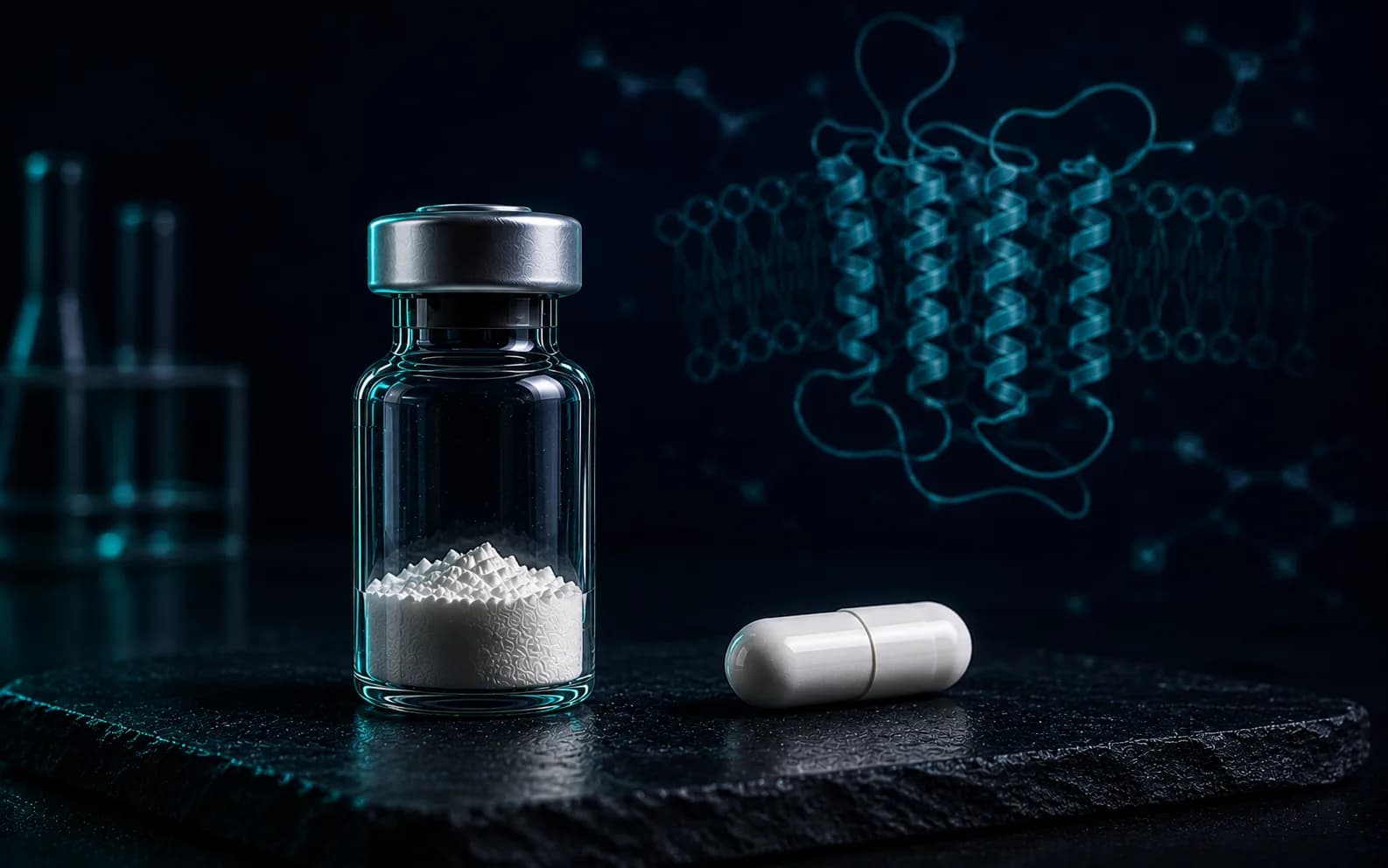
Both molecules hit the same ghrelin receptor. One is an injectable pentapeptide, the other is an oral small molecule. The mechanism overlaps; almost everything else doesn't.
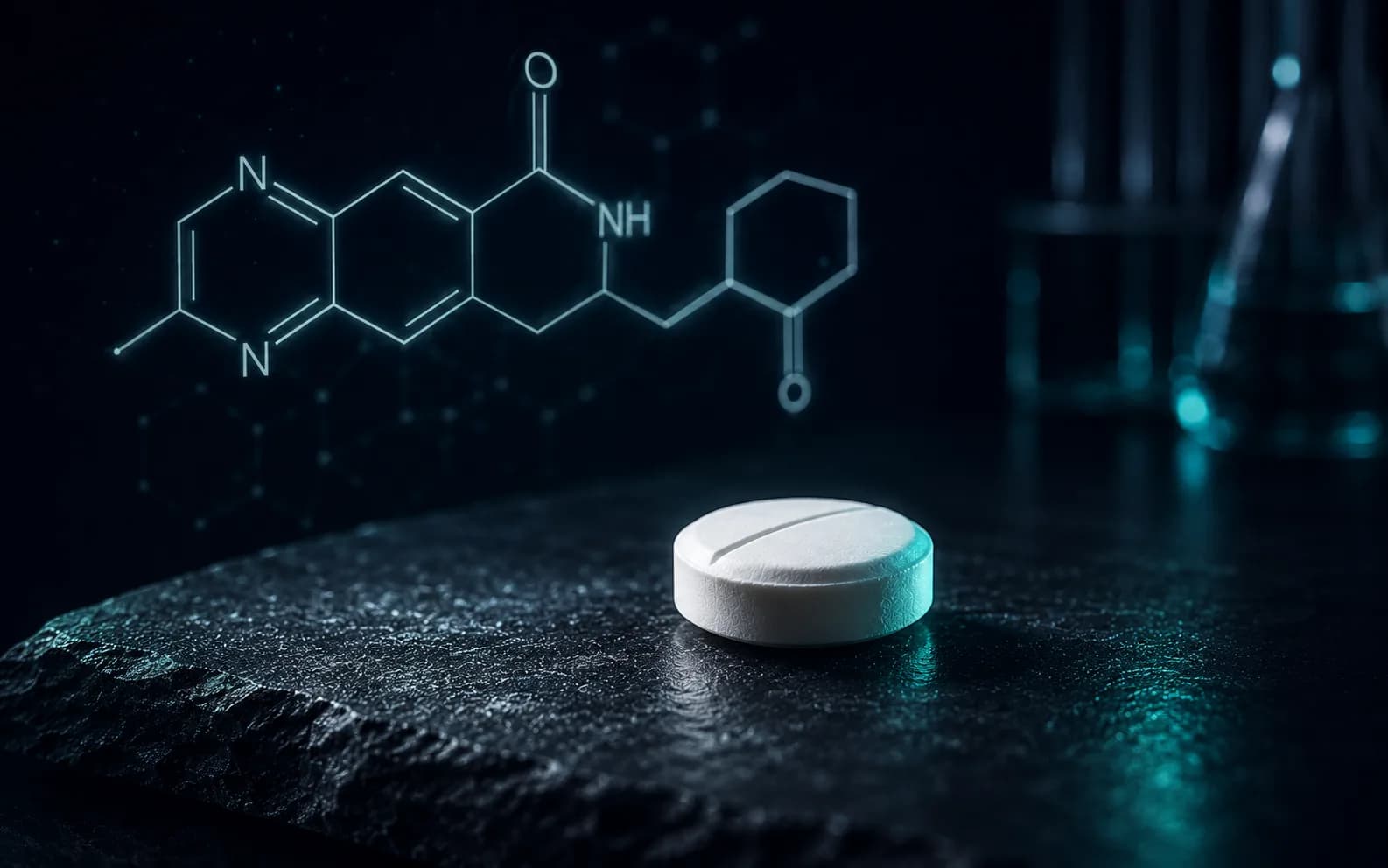
MK-677 (ibutamoren) is a non-peptide small-molecule oral ghrelin-receptor agonist. Most marketing calls it a peptide. This guide corrects the category and walks through the actual research.
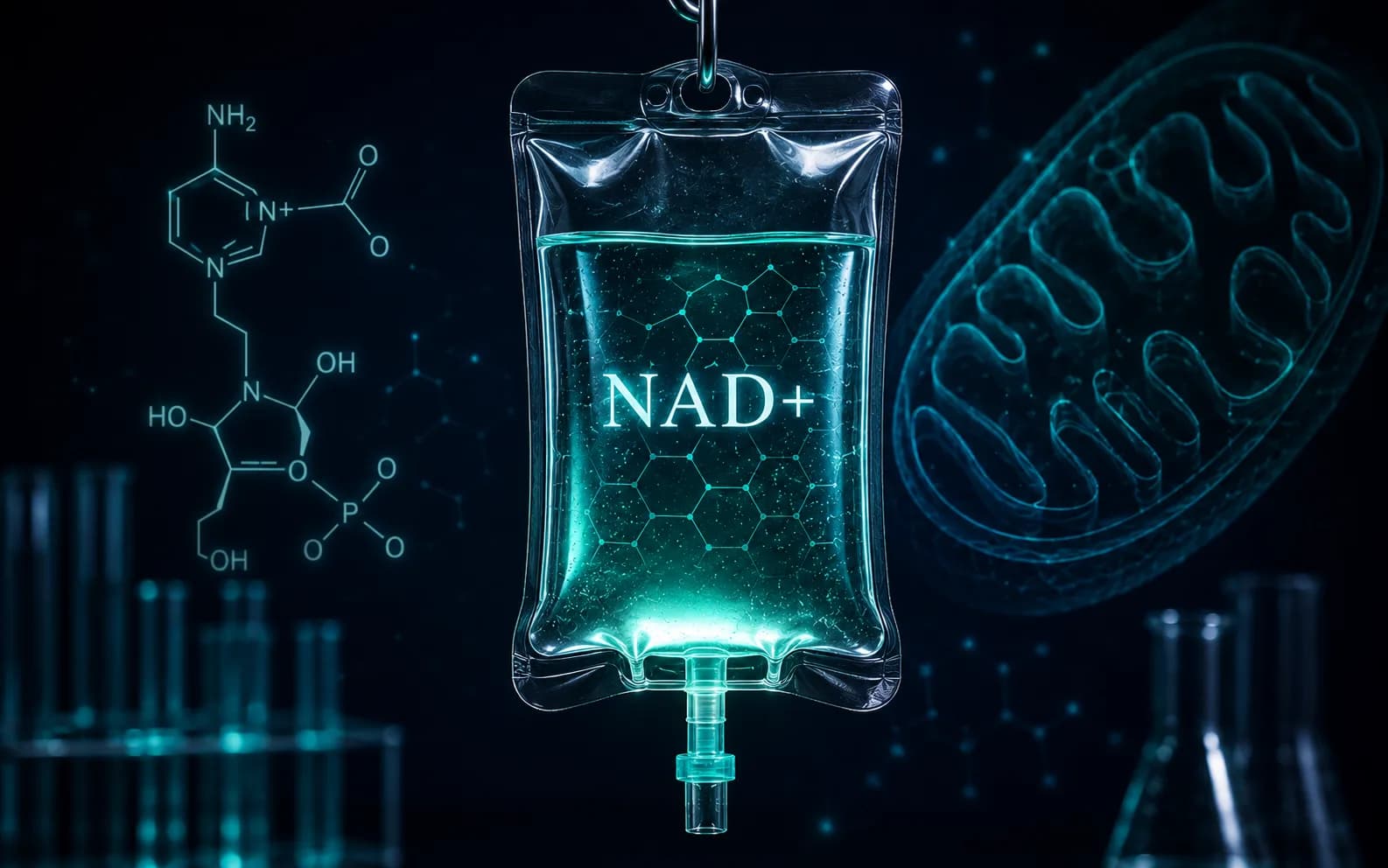
NAD+ is not a peptide. It is a dinucleotide coenzyme central to sirtuin biology, DNA-damage repair, and cellular energy. This guide separates the published mechanism from the marketing.

PT-141 and Melanotan II share a chemical family but split completely on receptor selectivity, regulatory approval, and safety. The mole-and-melanoma question is not optional reading.

Three GLP-1 family peptides, three different receptor mechanisms, three different regulatory positions in Europe. Here is what the published trials and the EMA EPARs actually say.

Sermorelin, CJC-1295 and tesamorelin are three different points on the same GHRH map. Only one of them has an EMA EPAR — and that matters more than any forum stack ever will.

Animal-model researchers pair BPC-157 and TB-500 because the two peptides work through different mechanisms. The literature is preclinical, the marketing is louder than the evidence.

BPC-157 is discussed widely, but the literature is mostly about mechanisms and preclinical models. This guide keeps the boundaries clear.
GHK-Cu has a real skin-research footprint, but formulation, route, and evidence limits still matter.

GLP-1 is no longer one simple bucket. Semaglutide, tirzepatide, and retatrutide sit in different evidence and mechanism contexts.
Quality & verification
How purity is actually proven: reading a certificate of analysis, what an HPLC trace shows, and separating cited research from marketing claims.

A calm buyer's guide to CoA basics: what to check, what a purity number can and cannot prove, and how Peptyds routes quality proof.

HPLC is a useful purity signal, but it should be read with method context, chromatogram quality, and identity confirmation.

A research-literate guide for reading peptide claims: study type first, human relevance second, buying decision third.
Handling & storage
Reconstitution, cold chain, lyophilised stability, and the storage mistakes that quietly degrade a vial before it is ever used.
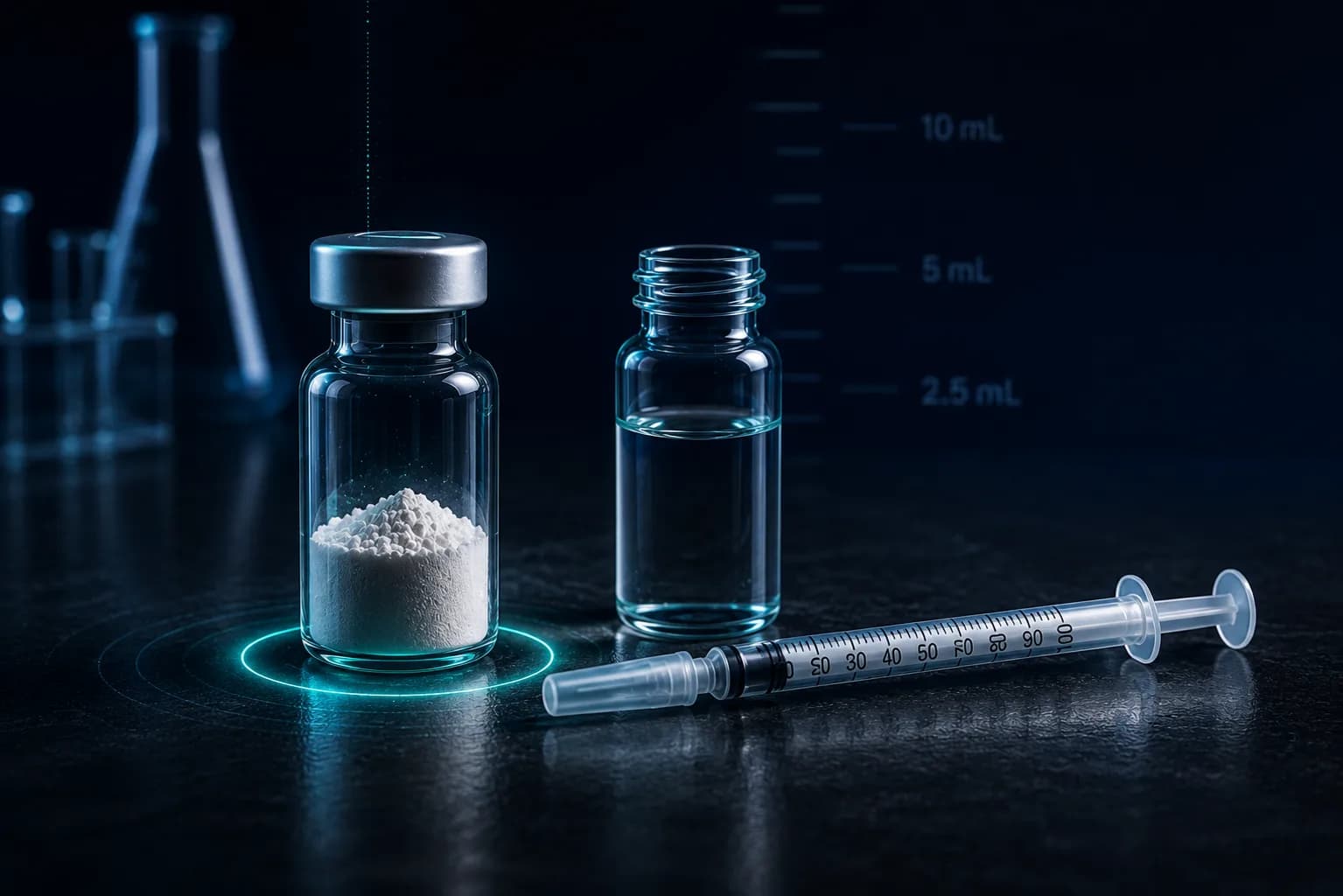
Reconstitution is the moment a sterile lyophilised peptide meets bacteriostatic water — done well, it preserves the molecule; done badly, it wastes the batch. Here is the calm version.

Cold-chain shipping is a quality system: packaging, handover, delivery timing, and exception handling all matter.

Lyophilization is about stability, moisture control, and transport confidence - not drama around fragile vials.

Most storage mistakes are not dramatic. They are small process failures: unclear instructions, moisture exposure, light, and avoidable temperature swings.
Buying in Europe
EU legal status, what a compliant European supplier looks like, and what to check before a first order ships.
The European legal landscape for peptides is more textured than a single rule. A clear read of the 2026 framework separates EMA-authorised medicines, unapproved research compounds, national variation, and competitive-sport rules.

Five concrete checks before checkout: batch CoA from an independent lab, EU fulfilment, temperature handling, transparent storage info, identifiable seller.