

Weight and metabolic-support peptides are short signaling molecules studied for incretin receptor activation, satiety signaling, and glycemic control in clinical research.
Weight / Metabolic Support
All products listed under this goal are supplied for in vitro laboratory research only and are not intended for human consumption or therapeutic use.
Peptides that support metabolic balance and body composition — explained without the supplement-store noise.
A short catalogue of peptides that support metabolic balance — each with clear dosage, research links, and a documented quality process.
- What's the difference between metabolic support and body composition?
- Which peptide should I look at first?
- Where can I see the lab results for each batch?
A short list of peptides that fit this goal.
We keep the choice focused. Every peptide here has a clear purpose, ISO/IEC 17025 lab testing, and a product page written without jargon.
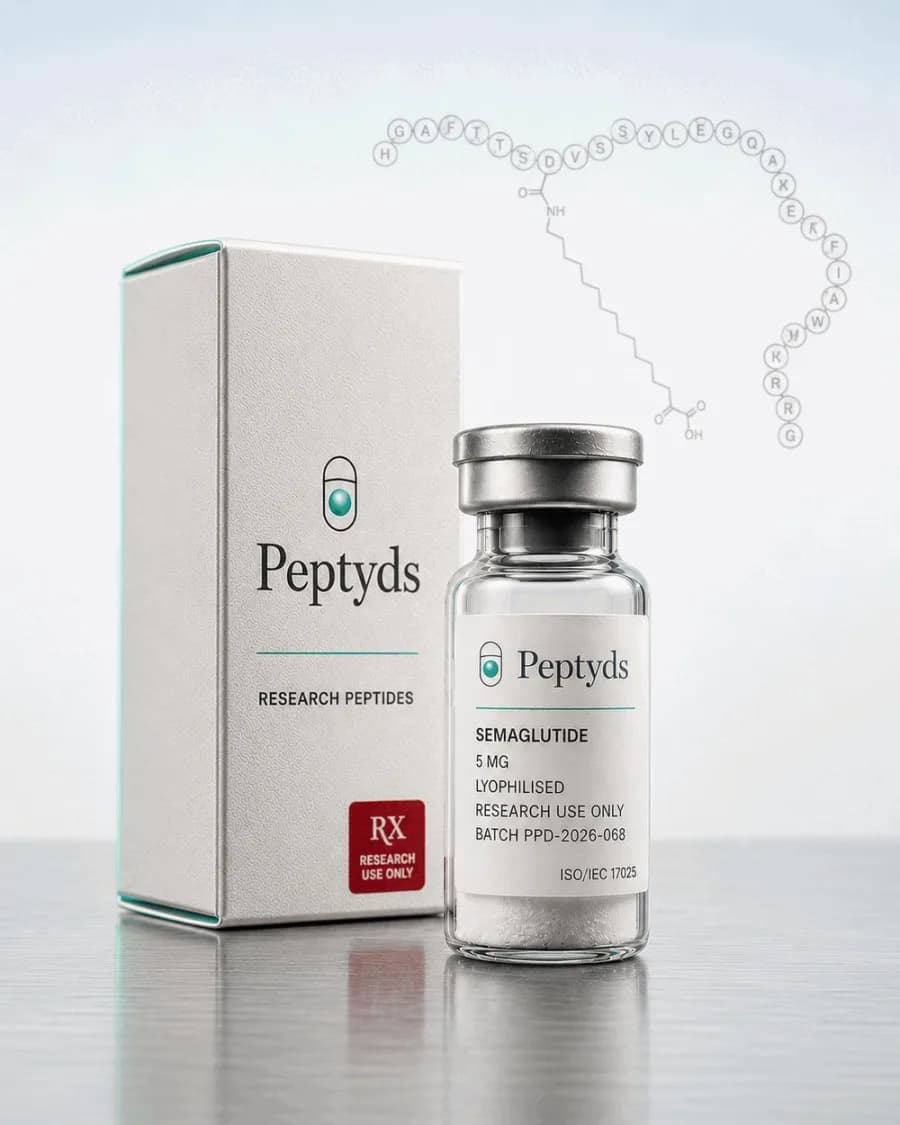
A GLP-1 receptor agonist studied for its effects on appetite regulation and metabolic signalling — investigated in weight and metabolic support contexts.
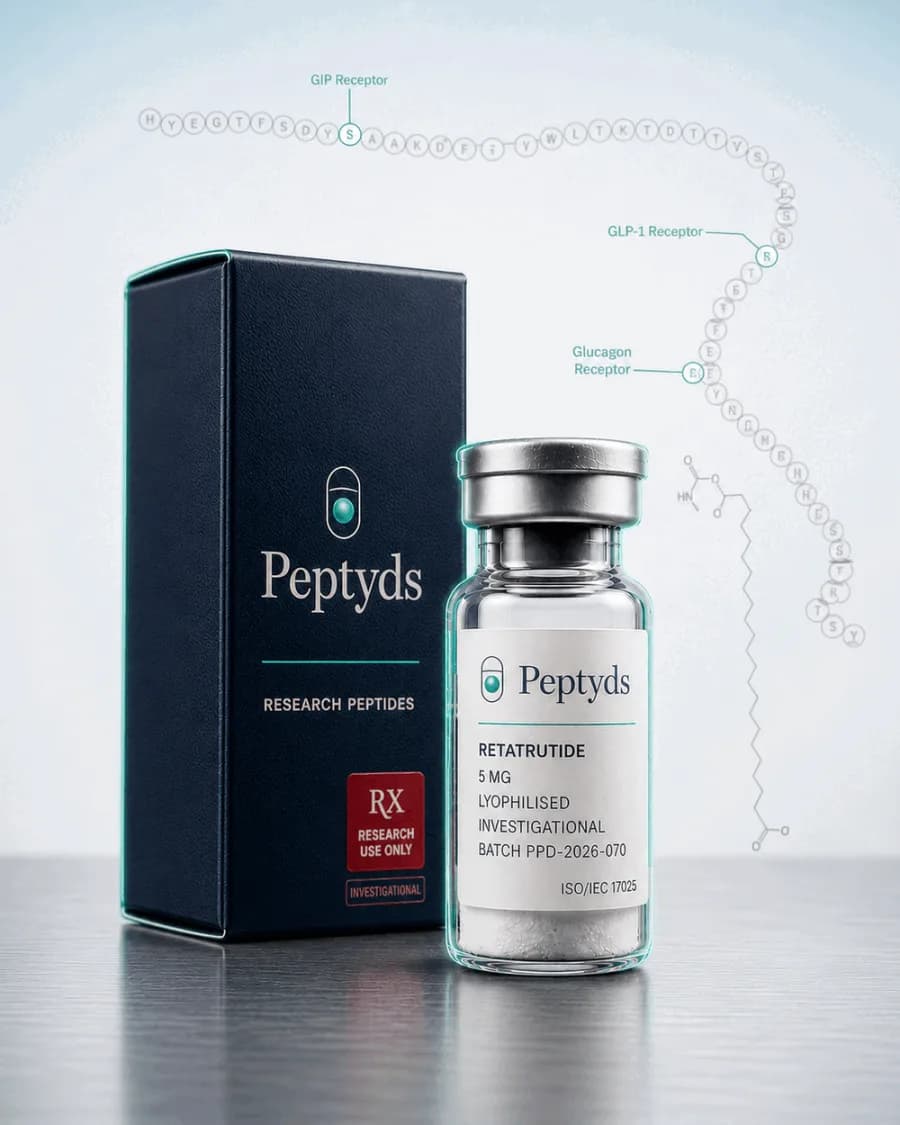
A triple agonist peptide targeting GIP, GLP-1, and glucagon receptors — studied in advanced metabolic and weight-regulation contexts.
A GHRH analogue studied for visceral fat reduction and body-composition support — used in clinician-supervised metabolic and growth hormone contexts.
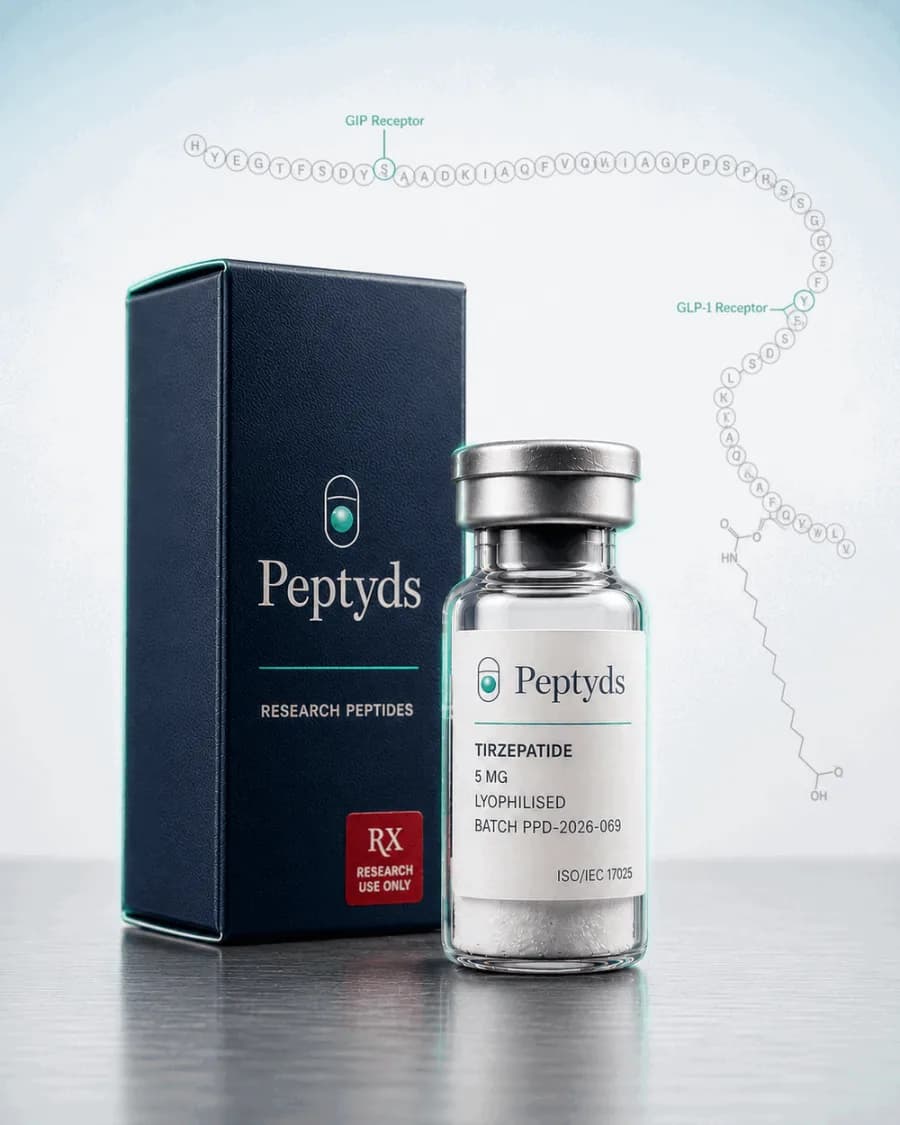
A dual GIP/GLP-1 receptor agonist studied for its effects on appetite regulation, metabolic balance, and body composition — framed for clinician-guided routines.
- metabolic-signalling
- goal-led-discovery
Each release is matched with quality documentation through a documented verification path. Identity, purity, and composition test results sit on the product page before you buy.
Every batch is verified by an ISO/IEC 17025-accredited laboratory before release. Identity, purity, and documentation travel with the product — not behind a form.
Lyophilization is about stability, moisture control, and transport confidence - not drama around fragile vials.
Cold-chain shipping is a quality system: packaging, handover, delivery timing, and exception handling all matter.
GLP-1 is no longer one simple bucket. Semaglutide, tirzepatide, and retatrutide sit in different evidence and mechanism contexts.
Three GLP-1 family peptides, three different receptor mechanisms, three different regulatory positions in Europe. Here is what the published trials and the EMA EPARs actually say.
The two are usually compared on one number — how much weight came off. That number favours retatrutide, and it is also the least useful basis for choosing between them.
This pairing sets the widest gap in the GLP-1 family: one receptor against three, and a decade of authorised use against a single published phase 2 trial.
Goal-led shopping helps guided buyers compare research context, quality proof, and product fit without decoding every molecule first.
Most storage mistakes are not dramatic. They are small process failures: unclear instructions, moisture exposure, light, and avoidable temperature swings.
Five concrete checks before checkout: batch CoA from an independent lab, EU fulfilment, temperature handling, transparent storage info, identifiable seller.
Tesamorelin is the rare GHRH analogue with a randomised-controlled-trial dataset behind it — but only in one specific clinical population. The honest version separates that data from the consumer marketing.
Questions people ask about this category.
Honest, short answers to the things most shoppers want to know before they buy.
Most people know the outcome they want — better recovery, long-horizon support, better skin — before they know which molecule fits. Starting from the goal makes the product choice clearer and reduces the risk of buying something that does not fit the routine.
Every batch ships with a batch code printed on the vial. The matching independent lab report — showing identity, purity, and composition — is linked on the product page and stays on your order page after purchase.
Each page opens with a clear purpose line and the testing behind it, then expands into research notes, dosing specifications, and linked peer-reviewed studies for readers who want more depth. You decide how deep you go.