

Science

Are Peptides Steroids? Peptides vs Steroids Explained

No — peptides are not steroids. A peptide is a short chain of amino acids joined by peptide bonds; a steroid is built on a four-ring carbon skeleton (cyclopenta[a]phenanthrene), and steroid hormones such as testosterone are made from cholesterol. The two classes also signal differently: peptide hormones bind receptors on the cell surface, while steroid hormones cross the membrane and act through receptors that switch genes on or off. They meet in physiology — the peptides GnRH and LH drive testosterone production — and in anti-doping rules, which list them in separate sections (WADA S1 and S2).

8 min readUpdated 22 Sept 2026Reviewed by Independent EU laboratory (ISO/IEC 17025)
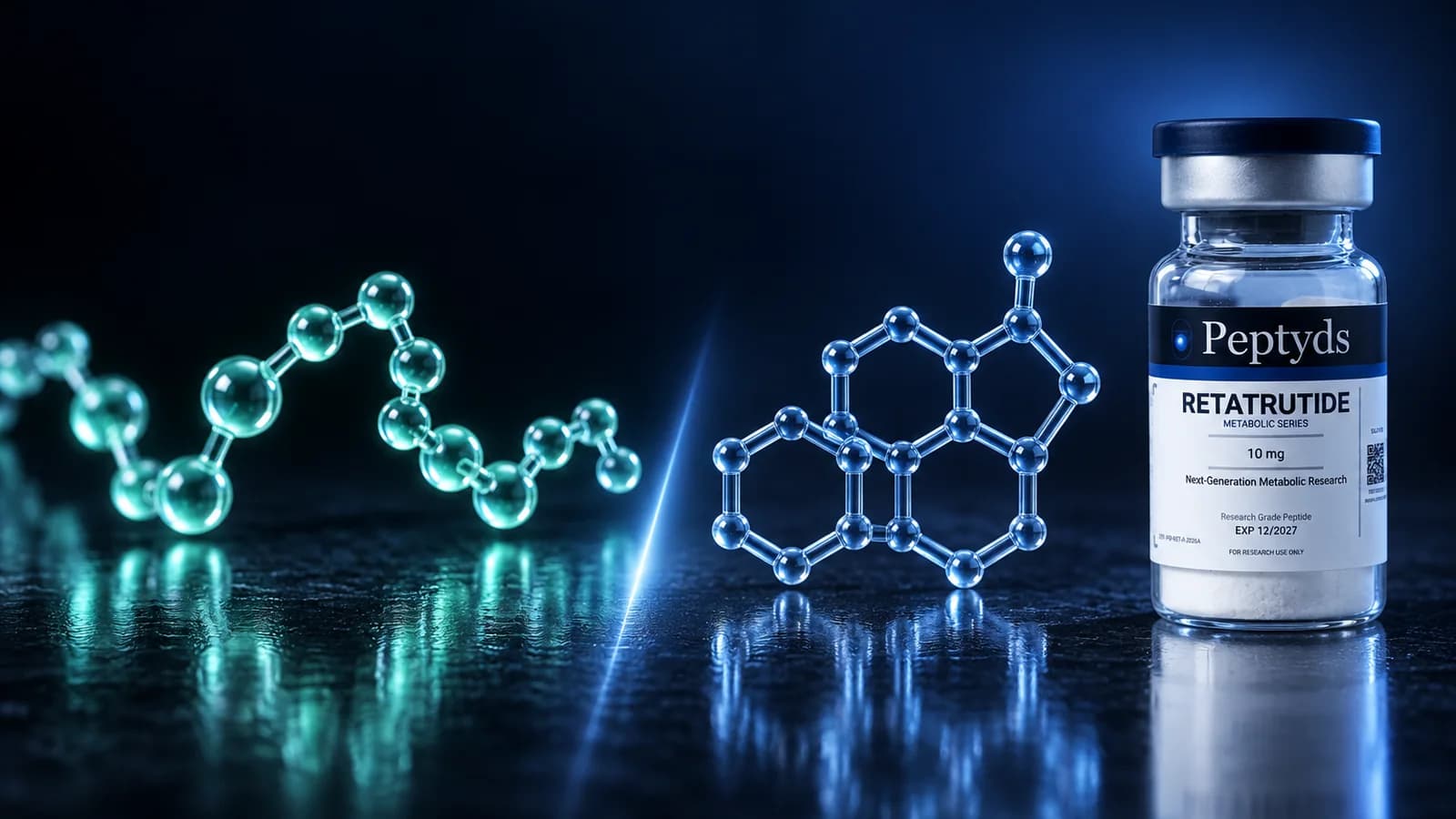
A flexible chain of glass beads and a rigid four-ring glass skeleton divided by a beam of light, beside a sealed Peptyds research vial.
Jump to section
  1. 01Are peptides steroids?
  2. 02What is the chemical difference between a peptide and a steroid?
  3. 03How do peptide hormones and steroid hormones work differently?
  4. 04Why are peptides so often confused with steroids?
  5. 05Can peptides affect steroid hormones?
  6. 06Are peptides safer than steroids?
  7. 07How can you tell whether a compound is a peptide or a steroid?
  • Peptides are chains of amino acids; steroids are four-ring molecules made from cholesterol. They are different chemical classes.
  • Peptide hormones act on cell-surface receptors; steroid hormones enter the cell and act through receptors that regulate gene transcription.
  • 'Anabolic' describes an effect, not a structure: insulin is a peptide, testosterone is a steroid, and both are called anabolic.
  • Peptide hormones sit upstream of steroid hormones: GnRH and LH drive testosterone production in the testes.
  • WADA lists anabolic androgenic steroids under S1 and peptide hormones, releasing factors and mimetics under S2.
  • Chemical class says nothing about safety; each compound has to be judged on its own evidence.

Are peptides steroids?

No. Peptides and steroids are two different classes of molecule. A peptide is a short chain of amino acids — typically 2 to 50 — joined by covalent amide bonds, known as peptide bonds. A steroid is defined by its carbon skeleton: the IUPAC nomenclature describes steroids as compounds built on the cyclopenta[a]phenanthrene ring system, normally carrying methyl groups at C-10 and C-13. Neither class is a subtype of the other.[2][3]

The mix-up is understandable, because both classes include hormones. Biochemistry references divide the endocrine hormones into three broad chemical families: peptides, steroids and tyrosine derivatives such as adrenaline and thyroid hormone. Insulin and growth hormone belong to the peptide family; testosterone, cortisol and aldosterone are steroids.[1]

Continue reading:What are peptides?

What is the chemical difference between a peptide and a steroid?

A peptide is assembled from building blocks. Each peptide bond forms in a condensation reaction between the carboxyl group of one amino acid and the amino group of the next, releasing a molecule of water, and the order of the amino acids — the sequence — defines the peptide. Cells make peptides on ribosomes; in the laboratory, the standard method is solid-phase peptide synthesis.[2]

A steroid is a fused ring system rather than a chain: three six-membered carbon rings joined to one five-membered ring. Steroid hormones are synthesised from cholesterol, which makes them lipophilic — they diffuse freely across cell membranes. Individual steroids differ in their side groups and bonds, which is what lets each one bind its own intracellular receptor.[1][3]

Peptide hormones also span a wide size range, from about 3 to 200 amino acids. Insulin has 51, split across two chains held together by disulfide bonds; the recombinant growth hormone used in medicine is a single chain of 191 amino acids with a molecular weight of about 22,000.[1][6]

How do peptide hormones and steroid hormones work differently?

Peptide hormones are water-soluble and act on receptors at the cell surface. Cells make them as larger precursors, package them in secretory vesicles and release them when stimulated. At the target cell they bind G protein-coupled receptors, receptor tyrosine kinases or cytokine-type receptors, and the signal is relayed inside the cell by second messengers and chains of protein kinases.[1][2]

Steroid hormones take the other route. Being lipophilic, they cross the cell membrane and bind receptors inside the cell. Every steroid hormone receptor works as a transcription factor: once the hormone binds, the receptor pairs up, moves to the nucleus, attaches to DNA sequences called hormone response elements and changes which genes are transcribed.[1]

So even when a peptide and a steroid act on the same tissue, they use different receptors and different molecular machinery. Growth hormone signals through a cell-surface receptor linked to the JAK/STAT pathway; testosterone acts through the androgen receptor, a member of the intracellular steroid receptor family.[1][6]

Why are peptides so often confused with steroids?

Mostly because they turn up in the same conversations. The Endocrine Society's scientific statement on performance-enhancing drugs identifies anabolic-androgenic steroids — all derivatives of testosterone — as by far the most prevalent in this group, but notes that athletes and non-athlete weightlifters also use growth hormone, IGF-1 and insulin, and that GH-releasing peptides and ghrelin mimetics are sold online.[6]

The word 'anabolic' adds to the blur. It describes an effect — building tissue — not a structure. Insulin, a 51-amino-acid peptide, is described as the body's principal anabolic hormone, while anabolic-androgenic steroids are testosterone derivatives. Calling a peptide 'anabolic' does not make it a steroid, and calling it 'not a steroid' says nothing about what it does.[2][6]

Anti-doping rules keep the two classes apart. The 2026 WADA Prohibited List places anabolic androgenic steroids in section S1 (anabolic agents), and peptide hormones, growth factors, related substances and mimetics in section S2, which names GHRH analogues, growth hormone secretagogues and GH-releasing peptides among its examples.[7]

Continue reading:How to separate peptide evidence from hype

Can peptides affect steroid hormones?

Yes — in normal physiology, peptide hormones sit upstream of many steroid hormones. The hypothalamus releases gonadotropin-releasing hormone (GnRH), a decapeptide, which stimulates the pituitary to secrete luteinising hormone (LH) and follicle-stimulating hormone (FSH). In the testes, Leydig cells then produce testosterone from cholesterol, and rising LH and FSH increase that steroid output.[5][4]

The adrenal gland follows the same logic. Steroid synthesis begins when the endocrine cell is stimulated by a peptide hormone such as ACTH; in the adrenal cortex, the zona fasciculata then routes the cholesterol-derived precursor pregnenolone towards cortisol.[1]

Feedback runs the other way. Testosterone normally restrains LH release, and the Endocrine Society statement describes how exogenous anabolic steroids suppress pituitary LH and FSH — sometimes for months or years after use stops. WADA reflects this physiology by listing 'testosterone-stimulating peptides in males', such as chorionic gonadotrophin, LH and GnRH analogues, in S2 rather than with the steroids in S1.[4][6][7]

Are peptides safer than steroids?

Chemical class is not a safety profile. The Endocrine Society statement warns of a widespread misperception that performance-enhancing drug use is safe, and links it to cardiovascular, psychiatric, metabolic, endocrine, hepatic and other disorders. Its review of adverse effects covers the peptide and protein hormones growth hormone and insulin as well as anabolic steroids.[6]

For many research peptides the gap is missing data rather than a documented risk. The same statement notes that GH-releasing peptides and ghrelin mimetics are available online while there are no data on how widely they are used. 'Peptides are the safe alternative to steroids' is therefore a marketing line, not a finding.[6]

This article explains chemistry and physiology. It is not advice on personal use of any compound, and decisions about medicines belong with a qualified healthcare professional.

How can you tell whether a compound is a peptide or a steroid?

Look at how it is written down. A peptide has an amino-acid sequence: human GnRH, for example, is pGlu-His-Trp-Ser-Tyr-Gly-Leu-Arg-Pro-Gly-NH2. A steroid carries a systematic chemical name built on its ring skeleton, with substituents numbered at positions such as C-10, C-13 and C-17.[5][3]

Some compounds are neither. MK-677 (ibutamoren) is often sold alongside peptides because it mimics growth-hormone-releasing peptides, but it is an orally active non-peptide molecule. WADA lists it among growth hormone secretagogues and their mimetics in S2, not with the anabolic steroids in S1.[8][7]

For research material, the paperwork should settle the question. A peptide's certificate of analysis should state the sequence and confirm identity by mass spectrometry for the specific batch, alongside a purity result and the method that produced it.

Continue reading:Read the science overviewHow to read a certificate of analysisMK-677 complete guide

Sources

  1. [01]
  2. [02]
  3. [03]
  4. [04]
  5. [05]
  6. [06]
  7. [07]
  8. [08]

Questions

Is testosterone a peptide or a steroid?

A steroid. Testosterone is the principal androgen, made from cholesterol by Leydig cells in the testes. Anabolic-androgenic steroids are chemical derivatives of testosterone.[4][6]

Is growth hormone a steroid?

No. Growth hormone is a protein hormone: the recombinant form used in medicine is a single chain of 191 amino acids. It acts through a cell-surface receptor that signals via the JAK/STAT pathway, not through a steroid receptor.[6][1]

Is insulin a steroid?

No. Insulin is a 51-amino-acid peptide hormone made of two chains linked by disulfide bonds. It binds a cell-surface receptor with its own tyrosine kinase activity.[2][1]

Are peptides anabolic steroids?

No. Anabolic-androgenic steroids are testosterone derivatives built on a steroid ring skeleton. Some peptide hormones have anabolic effects, but 'anabolic' describes an effect rather than a chemical class, and WADA lists the two groups in separate sections, S1 and S2.[6][7]

Are peptides banned in sport like steroids?

Many are. WADA's S2 section covers peptide hormones, growth factors, related substances and mimetics — including GHRH analogues, growth hormone secretagogues and GH-releasing peptides — and, like S1 for anabolic agents, it applies at all times, in and out of competition.[7]

Is MK-677 a peptide or a steroid?

Neither. MK-677 (ibutamoren) is an orally active non-peptide molecule that mimics growth-hormone-releasing peptides. WADA classifies it with the growth hormone secretagogues in S2, not with the anabolic steroids in S1.[8][7]

Educational content. Not medical advice.

Next step

Choose the route that matches how you read.