

Science

Peptides in Skin Care: What the Research Actually Shows

Peptides in skin care are short chains of amino acids used as cosmetic ingredients. Reviews group them as signal peptides (such as palmitoyl pentapeptide-4, known as Matrixyl), neurotransmitter-inhibitor peptides (such as acetyl hexapeptide-3, known as Argireline), carrier peptides (such as the copper complex GHK-Cu) and enzyme-inhibitor peptides. Several have randomised, placebo-controlled trials behind them, but those trials are small and short and measure surface wrinkles or roughness. The main scientific catch is penetration: most peptides are large, water-loving molecules that cross the skin barrier poorly.

8 min readUpdated 22 Sept 2026Reviewed by Independent EU laboratory (ISO/IEC 17025)
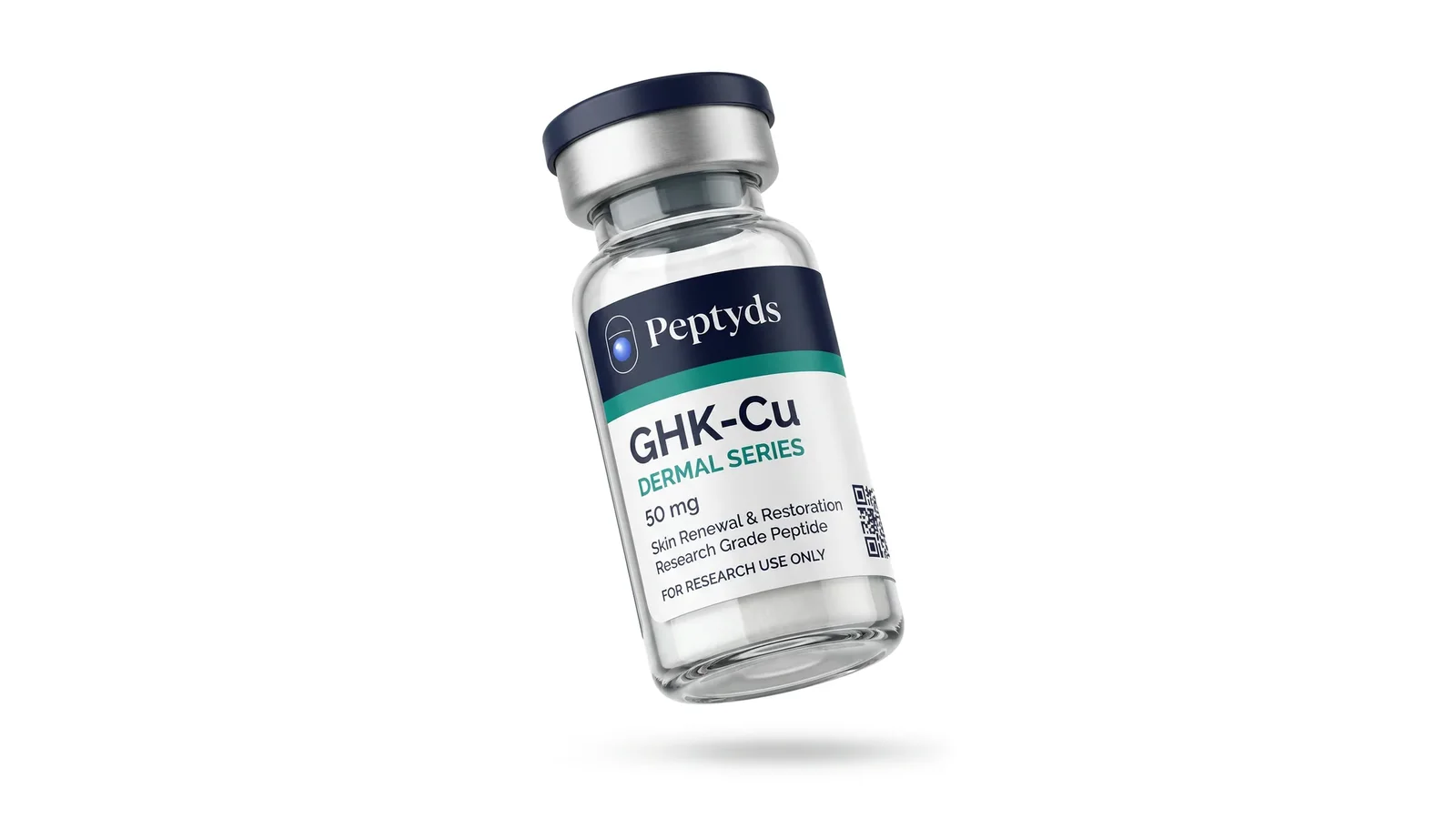
A sealed Peptyds GHK-Cu research vial, tilted in mid-air against a clean white background.
Jump to section
  1. 01What are peptides in skin care?
  2. 02Signal peptides: what does the Matrixyl research show?
  3. 03Neurotransmitter-inhibitor peptides: how is argireline meant to work?
  4. 04Carrier peptides: what are copper peptides like GHK-Cu?
  5. 05Can peptides actually get through the skin?
  6. 06How strong is the evidence for skincare peptides?
  7. 07How are skincare peptides regulated, and how do they differ from research peptides?
  • Skincare peptides are usually grouped as signal, carrier, neurotransmitter-inhibitor and enzyme-inhibitor peptides.
  • Palmitoyl pentapeptide-4 (Matrixyl) and acetyl hexapeptide-3 (Argireline) each have randomised, placebo-controlled trials, but those trials are small and short.
  • Argireline was designed to mimic part of SNAP-25; in the original laboratory work its efficacy was much lower than that of botulinum neurotoxin A.
  • The copper peptide GHK-Cu stimulates collagen synthesis in cell culture, but a small randomised trial after laser resurfacing found no objective difference.
  • Penetration is the main catch: most anti-wrinkle peptides are large, charged and water-loving, and the skin barrier resists them.
  • In the EU, peptide serums are cosmetic products under Regulation (EC) No 1223/2009; research-grade peptide powders are a separate category.

Discussed in this guide

  • GHK-CuA copper-peptide complex studied for skin barrier support, collagen signalling, and visible texture renewal.10 mg · 20 mg · 50 mg€0.78 / mg

What are peptides in skin care?

Peptides in skin care are short chains of amino acids added to creams and serums as active ingredients. Many are synthetic copies or modified fragments of sequences found in the body's own proteins: one of the best known is based on a five-amino-acid piece of type I procollagen, the precursor of collagen.[2][3]

Reviewers sort them by what they are meant to do. A 2009 review grouped topical peptides into signal peptides, enzyme-inhibitor peptides, neurotransmitter-inhibitor peptides and carrier peptides. A 2020 review of cosmetic peptides worked with three main groups: neurotransmitter inhibitors, carriers and signal peptides. The sections below follow that map.[1][2]

Continue reading:What are peptides? The basics

Signal peptides: what does the Matrixyl research show?

Signal peptides are designed to mimic the fragments that act as feedback signals when the skin makes matrix proteins such as collagen. The best-known example starts with a 1993 cell study: the five-amino-acid sequence KTTKS, a piece of the type I procollagen propeptide, was the minimum sequence needed to stimulate collagen and fibronectin production in cultured fibroblasts and other mesenchymal cells.[3][2]

Attaching a palmitoyl fatty-acid chain turned KTTKS into palmitoyl pentapeptide-4 (pal-KTTKS), known by the trade name Matrixyl; the lipid tail is meant to improve delivery across skin and stability against skin enzymes. In a 12-week, double-blind, placebo-controlled split-face study of 93 women aged 35 to 55, a moisturiser containing pal-KTTKS reduced wrinkles and fine lines more than the same moisturiser without it, as measured by image analysis and expert graders.[2][4]

That is a genuine controlled result, but it is one 12-week trial with a cosmetic endpoint. It does not show how long any effect lasts, and wrinkle measurements on the surface are not the same thing as measured changes in the skin's collagen.[4]

Neurotransmitter-inhibitor peptides: how is argireline meant to work?

Neurotransmitter-inhibitor peptides target the nerve signal behind expression lines. Acetyl hexapeptide-3, known by the trade name Argireline, is the sequence Ac-EEMQRR-NH2, designed to mimic the N-terminal end of the protein SNAP-25. In laboratory tests it interfered with the SNARE protein complex that nerve cells need to release neurotransmitters.[5][6][2]

The original 2002 paper reported that an emulsion containing the hexapeptide reduced wrinkle depth by up to 30% after 30 days in healthy women. It found the peptide's potency in inhibiting neurotransmitter release similar to that of botulinum neurotoxin A, but its efficacy much lower. A 2013 randomised, placebo-controlled study of 60 Chinese participants reported reduced roughness of the wrinkles around the eyes after four weeks, compared with no change on placebo.[5][6]

Neither study makes argireline a topical equivalent of botulinum toxin treatment. The first found far lower efficacy than the toxin, and both were short studies measuring surface wrinkles.[5][6]

Carrier peptides: what are copper peptides like GHK-Cu?

Carrier peptides deliver trace elements such as copper. The main example is copper tripeptide-1, the copper complex of the tripeptide GHK, which has an affinity for copper(II) ions. In fibroblast cultures, GHK-Cu stimulated collagen synthesis at very low concentrations.[2][7]

Clinical evidence is much thinner than the cell data. In a small randomised trial on skin resurfaced with a CO2 laser, 13 patients completed the study; GHK-Cu skin care made no objective difference to redness, wrinkles or overall skin quality, although satisfaction was higher among the patients who used it.[8]

Continue reading:GHK-Cu skin research in depthGHK-Cu vs BPC-157 for skin

Can peptides actually get through the skin?

Penetration is the central problem for skincare peptides. The skin's outer layer is an effective barrier, and a widely cited rule of thumb holds that a compound generally needs a molecular weight under about 500 daltons to be absorbed through it.[9]

A 2022 review concluded that most anti-wrinkle peptides are poor candidates for skin permeation: they tend to be large, water-loving and electrically charged, and skin enzymes can break them down. Fatty-acid chains, penetration enhancers, microneedles and nano-carriers can raise permeation, but the review warned that many peptides may not reach their targets in the skin at the right concentrations without such help.[10]

Copper peptide shows the problem in miniature. Copper applied as GHK-Cu crossed dermatomed human skin over 48 hours in a diffusion-cell study, yet another study found almost no peptide or copper passing intact human skin within nine hours unless the skin had been pretreated with microneedles.[11][12]

How strong is the evidence for skincare peptides?

The controlled trials that exist are small and short, running from about four weeks to three months, and they measure surface outcomes: wrinkle depth, skin roughness on silicone replicas, or expert grading of facial images.[4][6][5]

For some newer peptides there is less than that. A 2020 review of cosmetic peptides noted ingredients whose only efficacy data came from the manufacturer, and others with no published clinical studies at all, although they were already used in products on the market.[2]

The 2009 review that set out the four-group classification focused on controlled ex vivo and in vivo efficacy studies. For a reader, the useful question about any peptide product is whether such a study used that exact peptide, in a comparable formula, and measured the outcome being claimed.[1]

How are skincare peptides regulated, and how do they differ from research peptides?

In the EU, a peptide serum is a cosmetic product: a substance or mixture intended for the external parts of the body with a view exclusively or mainly to cleaning, perfuming, changing the appearance of, protecting or keeping them in good condition. Regulation (EC) No 1223/2009 also requires that cosmetic claims do not imply characteristics or functions a product does not have.[13]

Research-grade peptides are a different category. Peptyds supplies GHK-Cu as a lyophilised research compound for laboratory research, with a batch certificate for identity and purity. A research compound is not a finished cosmetic product, and nothing on this page is guidance for personal use.

Continue reading:View GHK-CuGLOW blend: GHK-Cu, BPC-157 and TB-500 explained

Sources

  1. [01]
  2. [02]
  3. [03]
  4. [04]
  5. [05]
  6. [06]
  7. [07]
  8. [08]
  9. [09]
  10. [10]
  11. [11]
  12. [12]
  13. [13]

Questions

Do peptides in skincare actually work?

Some have controlled evidence for modest, short-term effects: palmitoyl pentapeptide-4 reduced wrinkles versus placebo in a 12-week split-face trial of 93 women, and argireline reduced wrinkle roughness around the eyes in a four-week trial of 60 people. Most studies are small and short, and poor skin penetration limits many peptides.[4][6][10]

What are signal peptides?

Signal peptides are designed to mimic protein fragments that act as feedback signals for making matrix proteins such as collagen. The best known, pal-KTTKS, is based on a five-amino-acid piece of type I procollagen that stimulated collagen and fibronectin production in cultured cells.[2][3]

Is argireline a topical alternative to botulinum toxin?

It was designed to act on the same nerve-signalling machinery, the SNARE complex, but in the original laboratory work its efficacy was much lower than that of botulinum neurotoxin A. Its clinical studies are short and measure surface wrinkles.[5][6]

Are copper peptides the same as other skincare peptides?

No. Copper peptides such as GHK-Cu are carrier peptides: a tripeptide bound to copper(II). They are studied for collagen stimulation in cell culture, while signal and neurotransmitter-inhibitor peptides act on different targets.[2][7]

Can peptides penetrate the skin?

Many cannot, at least not well. Most anti-wrinkle peptides are large, water-loving and charged, which the skin barrier resists; fatty-acid chains, penetration enhancers, microneedles and nano-carriers are used to improve delivery.[9][10]

Are peptide serums regulated in the EU?

Yes, as cosmetic products under Regulation (EC) No 1223/2009, which defines cosmetics by their external use and appearance-related purposes and requires that claims do not imply functions a product does not have.[13]

Educational content. Not medical advice.

Next step

Choose the route that matches how you read.