
What is KPV, and where does it come from?
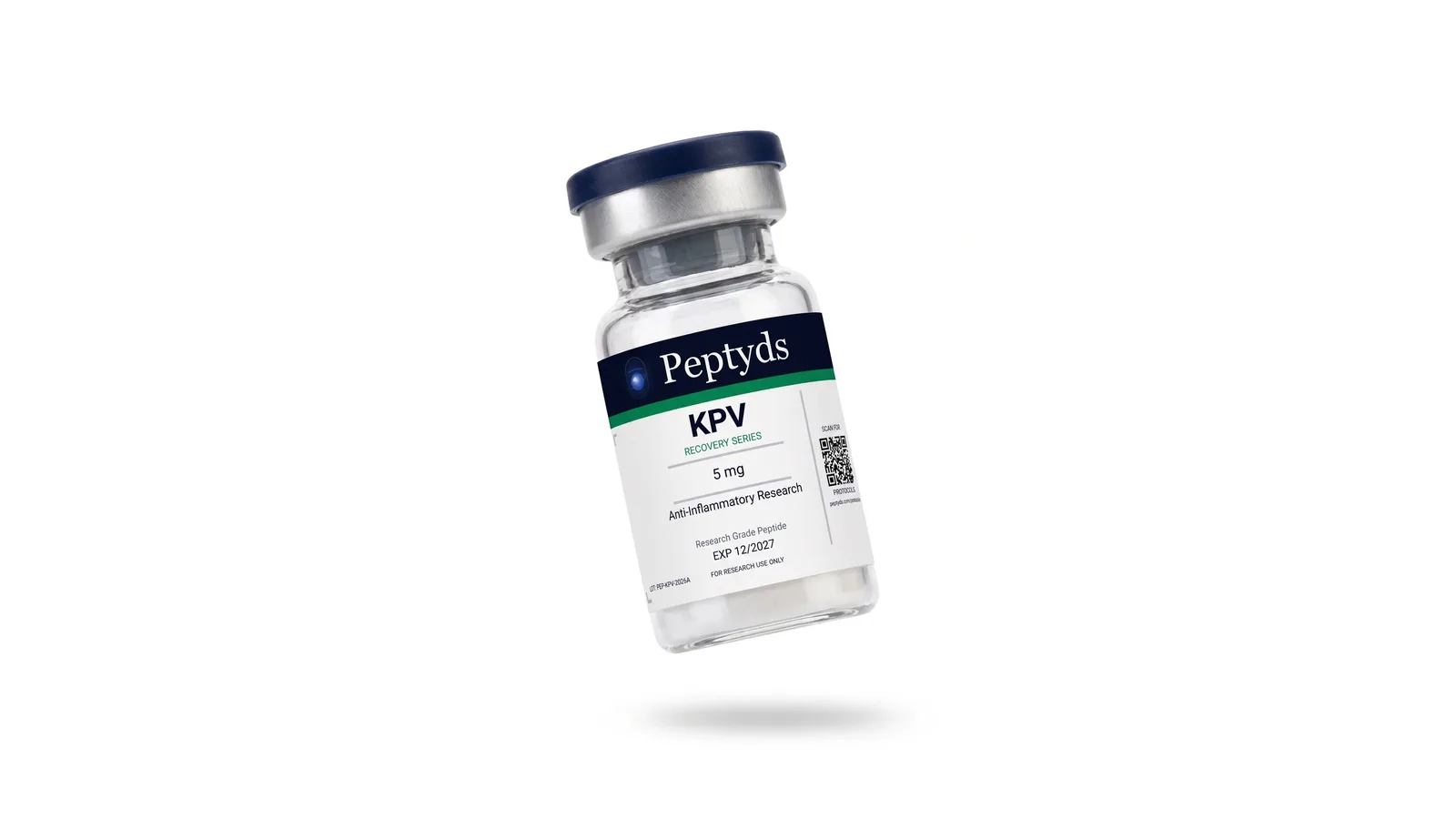
KPV is shorthand for Lysine-Proline-Valine, a tripeptide made of three amino acids. It is not a standalone hormone — it is the C-terminal fragment of alpha-melanocyte-stimulating hormone (alpha-MSH), a tridecapeptide (13 amino acids) that the body produces from proopiomelanocortin (POMC). In the full alpha-MSH sequence, KPV corresponds to residues 11 through 13, the last three links of the chain.[3][6]
That distinction matters for what KPV does and does not do. A review of alpha-MSH and its tripeptide fragments in Endocrine Reviews describes KPV as retaining the parent hormone's anti-inflammatory and protective signalling while lacking its pigmentary action — the melanocortin-1-receptor activity responsible for the skin-darkening effect associated with full alpha-MSH and synthetic tanning analogues such as Melanotan II and afamelanotide. Those tanning-focused compounds are built around alpha-MSH's receptor-binding core; KPV is the opposite end of the same hormone, the tail fragment researchers have proposed as a way to study alpha-MSH's anti-inflammatory pathways without that pigmentary side effect.[3]
A separate line of research places KPV specifically in gut biology: it is a substrate for PepT1, a transporter normally found in the small intestine and upregulated in colon tissue during inflammatory bowel disease. That transporter relationship is the basis for most of the intestinal-inflammation research discussed below.[1]
Continue reading:View KPV