

Research notes

BPC-157 Side Effects: What the Published Research Shows

Published toxicology studies in mice, rats, rabbits and dogs found BPC-157 well tolerated, with no lethal dose identified and only one reversible laboratory change (a kidney-function marker in dogs at the highest tested dose). Human safety evidence is far thinner: three small pilot studies (16, 12 and 2 participants) reported no adverse effects, but none screened for adverse events as rigorously as a safety trial or followed participants for more than weeks. No large controlled human trial and no long-term human safety study has been published. The honest answer to 'what are BPC-157's side effects' is that the animal record is reassuring and the human record is still too small to draw a real safety profile from.

9 min readUpdated 24 Sept 2026Reviewed by Independent EU laboratory (ISO/IEC 17025)
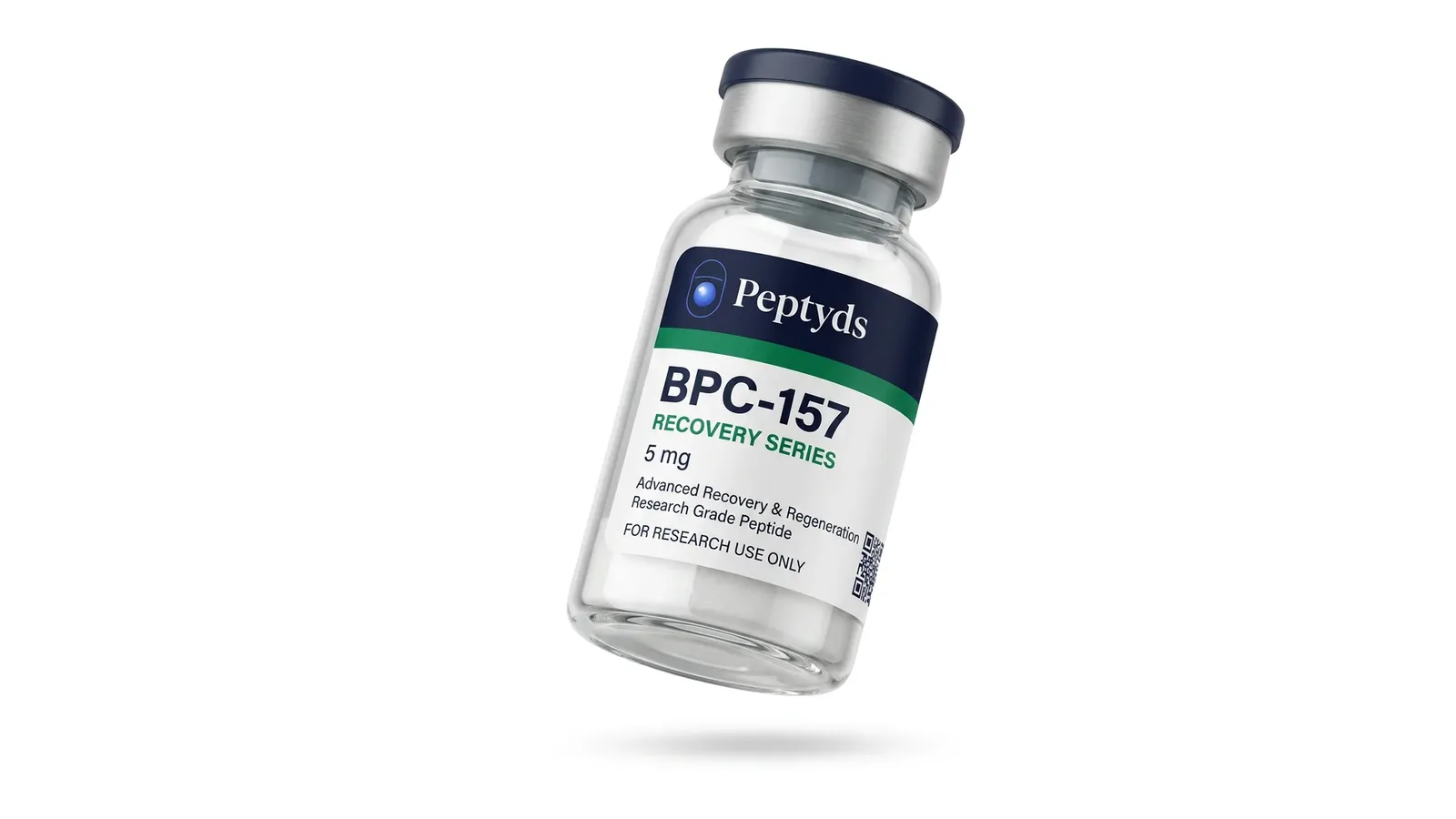
A Peptyds BPC-157 research vial photographed on a white background.
Jump to section
  1. 01What do we actually know about BPC-157 side effects?
  2. 02What the animal toxicology studies found
  3. 03What the human pilot studies report
  4. 04Theoretical safety concerns raised in the research literature
  5. 05Why regulators still flag BPC-157 despite a reassuring animal record
  6. 06BPC-157 vs TB-500: is the safety picture different?
  • Published animal toxicology (mice, rats, rabbits, dogs) found BPC-157 well tolerated, with no lethal dose identified in single-dose testing.
  • The only toxicology finding outside the control range was a reduced creatinine level in dogs at the highest repeated dose tested, which reversed within two weeks of stopping.
  • Only three small human pilot studies have been published — 16 participants (knee injections), 12 participants (interstitial cystitis) and 2 participants (intravenous safety) — and none reported adverse effects.
  • None of the three human pilot studies screened for adverse events as rigorously as a registration-grade safety trial, and all three reported favourable outcomes, a pattern reviewers flag as possible publication bias.
  • Researchers have raised theoretical, mechanism-based concerns — pathological blood-vessel growth linked to tumour biology, and nitric-oxide overproduction — that have not been observed as actual adverse events in any published study.
  • The absence of large human trials is itself the reason FDA and WADA cite when restricting BPC-157, not a specific documented harm.

Discussed in this guide

  • BPC-157 ComplexA recovery-focused peptide studied for its role in supporting the body's natural repair response — tendons, soft tissue, and gut-lining integrity.5 mg · 10 mg€4.90 / mg

What do we actually know about BPC-157 side effects?

Searches for "BPC-157 side effects" usually want one of two things: a list of symptoms to watch for, or reassurance that the compound is safe. The honest research-based answer is neither. BPC-157's animal-toxicology record is unusually reassuring for a compound its size; its human-safety record is unusually thin for a peptide this widely discussed online.

This article is the side-effects-specific companion to Peptyds' complete BPC-157 guide, which covers the discovery story, the VEGFR-2 / nitric-oxide mechanism research, and the WADA, EMA and FDA regulatory picture in depth. Here, the focus stays narrow: what has been published about tolerability, toxicology and adverse effects, and, just as importantly, what has not.

Two evidence tiers matter here. The first is formal preclinical toxicology: dedicated safety studies in animals, designed specifically to look for harm. The second is human pilot data: small, exploratory studies that were not designed as dedicated safety research but did report on tolerability. Both are described below exactly as their authors published them, including where each fell short of what rigorous safety testing would need.

Continue reading:Read the complete BPC-157 guideView BPC-157 Complex

What the animal toxicology studies found

The most directly relevant toxicology dataset is a 2020 study published in Regulatory Toxicology and Pharmacology, which tested BPC-157 in mice, rats, rabbits and dogs across single-dose and repeated-dose designs, plus dedicated local-tolerance, genetic-toxicity and embryo-fetal-toxicity testing. The single-dose toxicity study, run up to 20 mg/kg in rats, found no test-related effects the researchers could attribute to BPC-157, and no lethal dose was identified.[1]

Repeated dosing in dogs was well tolerated overall. The one change outside the control range was a decrease in creatinine, a standard kidney-function marker, at the highest repeated dose tested of 2 mg/kg; lower doses showed no such change, and the treated dogs' creatinine recovered spontaneously within two weeks after dosing stopped. The study's local-tolerance testing found only mild irritation at the injection site, and neither genetic toxicity nor embryo-fetal toxicity was observed.[1]

That is, as far as the published literature reaches, the single most concrete adverse finding anywhere in the BPC-157 safety record: one reversible laboratory change, in dogs, at the highest repeated dose tested. The researchers framed the overall dataset as supporting further clinical development, not as a safety concern.[1]

What the human pilot studies report

Human evidence is far thinner than the animal record. A 2025 narrative review in Current Reviews in Musculoskeletal Medicine could identify only three published human studies of BPC-157, and all three were small, uncontrolled pilot studies rather than dedicated safety trials. The largest, a 2021 retrospective study that contacted 16 patients who had received intra-articular BPC-157 knee injections about their pain relief 6 months to a year later, did not report adverse effects, but the review notes that adverse-event screening in that study "was not discussed at length".[3]

A 2024 pilot study gave 12 patients with interstitial cystitis intravesicular (bladder) BPC-157 and specifically screened for fever, skin rash, nausea, vomiting, worsening urinary symptoms and pain during intercourse; none of the 12 participants reported any of those effects. The most directly safety-focused study is a 2025 pilot trial that gave intravenous BPC-157 to two healthy adult volunteers and tracked them afterward; it reported no adverse effects, with plasma levels back to baseline within 24 hours.[3][2]

Two volunteers and two small outpatient pilots are not a safety database. The review's own caution is worth repeating directly: every published human study of BPC-157 to date has reported a favourable outcome, which its authors flag as a possible sign of publication bias, concluding that BPC-157 "should be considered investigational, and its use approached with caution" until well-designed clinical trials exist.[3]

Theoretical safety concerns raised in the research literature

Beyond what has actually been observed, researchers have flagged theoretical concerns based on BPC-157's own proposed mechanism of action, not on any adverse event recorded in an animal or human study. The 2025 review lists three: pathological (disease-driving) blood-vessel growth, formation of toxic metabolites, and overproduction of nitric oxide.[3]

The most-discussed of these is the angiogenesis question. BPC-157's research interest rests partly on its ability to promote new blood-vessel growth through VEGFR-2 signalling, the same pathway implicated in tumour growth and in some inflammatory diseases. No published study has reported an increased tumour rate or any other cancer-related outcome from BPC-157 research; the concern in the literature is mechanistic reasoning, not an observed result.[3]

It matters that these two evidence types do not contradict each other so much as sit at different stages: the dedicated toxicology study found no genetic toxicity and no tumour-related findings in its animal testing, while the review's caution is about what has not yet been tested for, specifically longer-duration human exposure at scale. Neither is a documented case of BPC-157 causing cancer; both are honest statements about the limits of what has been checked.[1][3]

Why regulators still flag BPC-157 despite a reassuring animal record

BPC-157 sits in FDA's Category 2 of nominated bulk drug substances, the category FDA uses for substances where its review identified potential significant safety risks in the compounding context. That is a regulatory categorisation, not a toxicology finding, and it does not contradict the preclinical safety data described above; it reflects how little human-dosing history and quality-control data exists for the substance outside formal trials.[4]

The World Anti-Doping Agency separately added BPC-157 to its Prohibited List in 2022, under section S0 (Non-Approved Substances), the category for pharmacological substances with no current approval for human therapeutic use by any government health authority. Reviewers connect both the FDA and WADA positions to the same underlying gap: an unregulated, widely available research compound with an unknown human-toxicity profile at scale, not a specific documented harm.[5][3]

Peptyds' complete BPC-157 guide covers this regulatory picture in full, including the EMA's non-authorisation and how the FDA's compounding caution is worded. This article's scope stays on the safety data itself; read the full guide for the regulatory detail.

Continue reading:Read the complete BPC-157 guideRead the quality protocol

BPC-157 vs TB-500: is the safety picture different?

The two peptides are frequently discussed together, and the comparison question comes up often enough to answer directly: BPC-157 and TB-500 (a synthetic fragment of thymosin beta-4) do not share a published safety dataset. The 2021 knee-injection study mentioned above did test BPC-157 combined with thymosin beta-4 in some patients, but as a pain-relief comparison, not as a safety study of the combination.[3]

The only controlled human safety data anywhere near this topic comes from a 2021 phase 1 trial of full-length recombinant thymosin beta-4, a larger, related but distinct molecule, not the shorter TB-500 fragment sold as a research peptide. In that trial's multiple-dose arm, mild-to-moderate adverse events occurred about as often with thymosin beta-4 as with placebo, and no serious adverse events or dose-limiting toxicity were reported.[6]

No published controlled human trial has tested the TB-500 fragment itself. So the honest answer to "do BPC-157 and TB-500 have side effects" is that BPC-157 has the animal-toxicology and small-pilot picture described above, thymosin beta-4 (the full-length parent molecule) has one reassuring phase 1 trial, and TB-500 specifically has no published human safety trial at all.[3][6]

Continue reading:Compare BPC-157 and TB-500Explore the recovery goal

Sources

  1. [01]
  2. [02]
  3. [03]
  4. [04]
  5. [05]
  6. [06]

Questions

What side effects does BPC-157 cause?

No adverse effects have been reported in the three published human pilot studies of BPC-157, and animal toxicology testing found the compound well tolerated with no lethal dose identified. The only documented deviation anywhere in the published record was a reversible decrease in a kidney-function marker in dogs at the highest repeated dose tested. Human safety data remains too limited to describe a full side-effect profile.[1][3][2]

Do BPC-157 and TB-500 have side effects?

BPC-157 has a reassuring animal-toxicology record and three tiny human pilot studies reporting no adverse effects. TB-500, the synthetic fragment of thymosin beta-4 sold as a research peptide, has no published controlled human safety trial at all; the one relevant phase 1 human trial tested the longer, full-length parent molecule instead, and found adverse-event rates similar to placebo. Neither peptide has the large-scale human safety data a marketed medicine would need.[3][6]

Is there long-term human safety data for BPC-157?

No. The longest published human follow-up is the 2021 knee-injection study, which asked participants about pain relief 6 months to a year later but was not designed to track long-term adverse effects. The dedicated intravenous safety pilot followed participants for 24 hours. No published study has followed human BPC-157 use for the months or years a long-term safety assessment would require.[3][2]

Can BPC-157 affect the liver or kidneys?

The only organ-function change reported anywhere in the published toxicology record is a decrease in creatinine, a kidney-function marker, in dogs given the highest repeated dose tested, a change that reversed within two weeks of stopping. No liver-function changes were reported in that study, and no human study has published liver or kidney panel data for BPC-157.[1]

Has BPC-157 been linked to cancer?

No published study has reported an increased tumour rate or other cancer-related finding from BPC-157. The concern in the literature is theoretical: BPC-157's angiogenesis-promoting mechanism overlaps with pathways also implicated in tumour growth, so reviewers flag it as a mechanism-based caution rather than a documented outcome.[3]

What did BPC-157 toxicology studies find?

A 2020 preclinical safety evaluation tested BPC-157 in mice, rats, rabbits and dogs, covering single-dose and repeated-dose toxicity, local tolerance, genetic toxicity and embryo-fetal toxicity. No lethal dose was identified, local irritation was mild, and no genetic or embryo-fetal toxicity was observed; the single reported deviation was a reversible creatinine decrease in dogs at the highest dose.[1]

Why do FDA and WADA restrict BPC-157 if the animal data looks reassuring?

Both positions are framed around the absence of human data rather than a specific documented harm. FDA lists BPC-157 in Category 2 of nominated bulk substances, its category for compounds where safety risk in compounding could not be ruled out, and WADA added it to the Prohibited List's S0 section for substances with no government health-authority approval for human use. Reviewers connect both to the same gap: no large, controlled human trial exists yet.[4][5][3]

Educational content. Not medical advice.

Next step

Choose the route that matches how you read.