

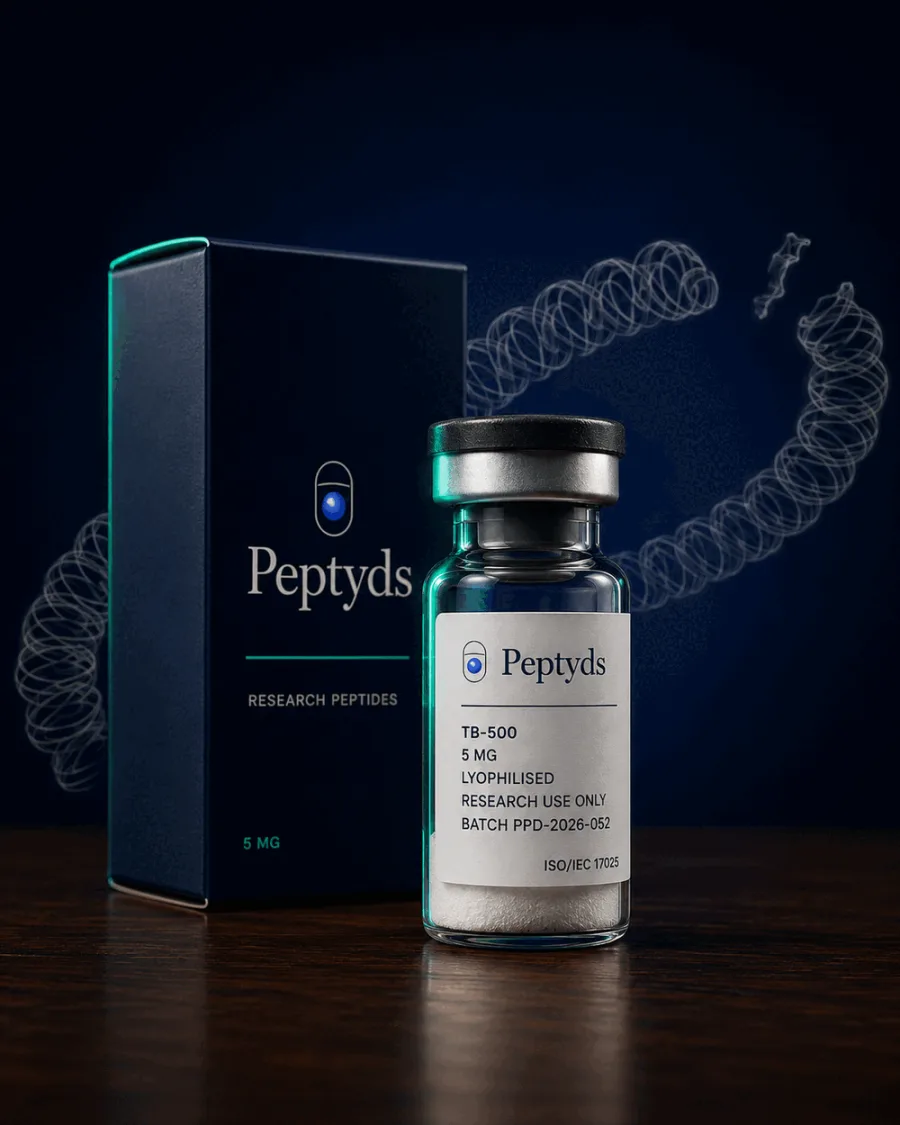
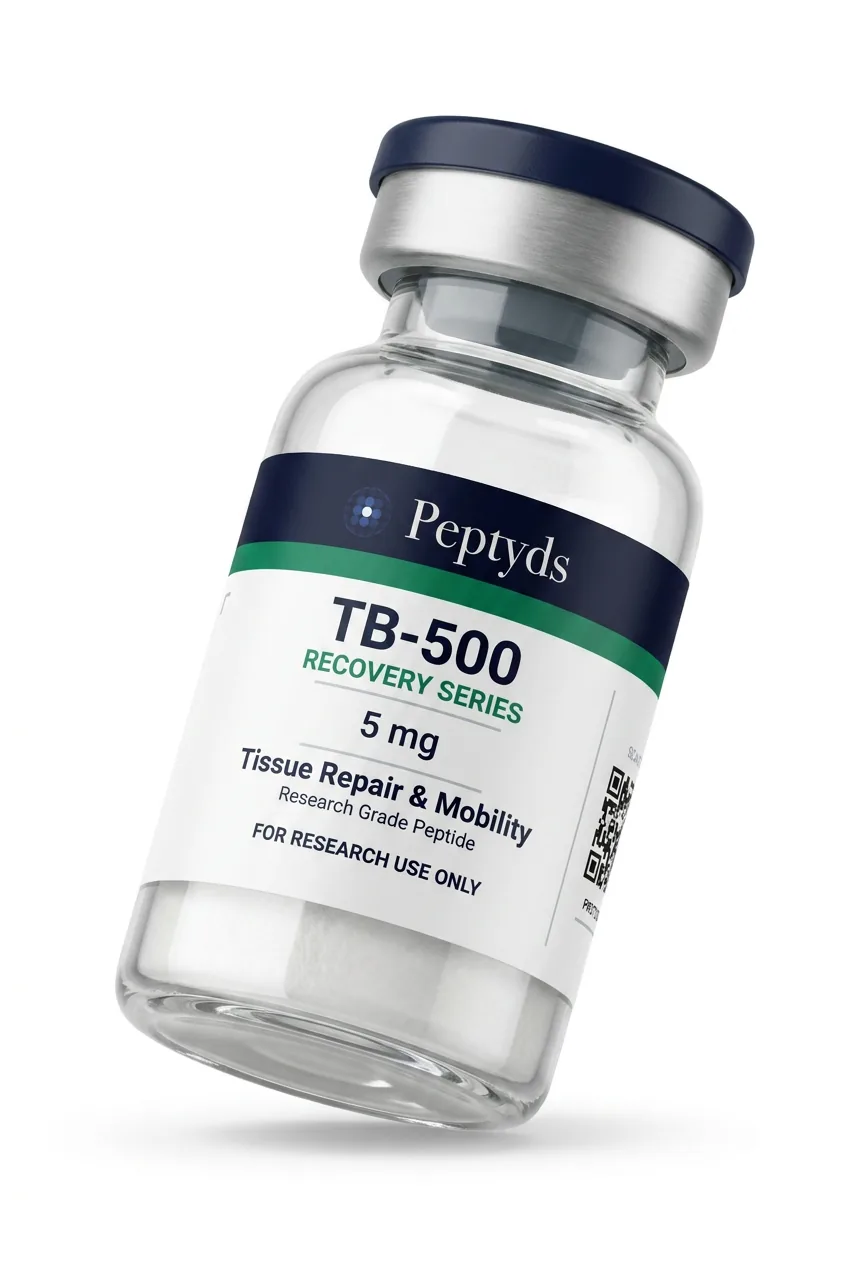
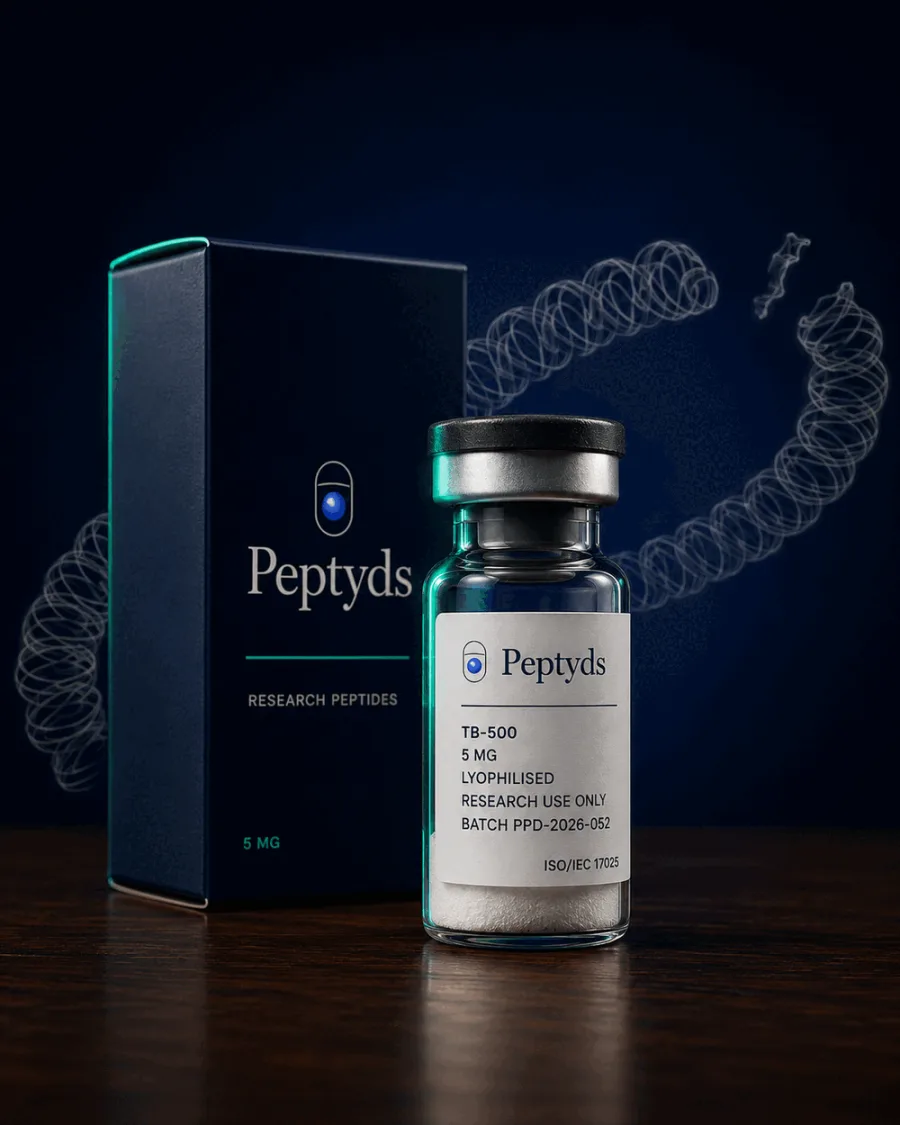
TB-500
TB-500 is a synthetic 17-amino-acid fragment of thymosin β4 synthesised as a research peptide, studied in soft-tissue repair research for its role in sequestering monomeric G-actin and upregulating VEGF-mediated angiogenesis.
Thymosin Beta-4 fragment studied for tendon, ligament, and soft-tissue repair — a recovery-specialist peptide for high-demand training and rehabilitation routines.
For Research Use Only — Not for Human Consumption.
Sold strictly for in vitro laboratory research purposes.
Listed under the WADA 2026 Prohibited List.
Not for use by competitive athletes in sanctioned sports.
- Availability
- Delivered in 3–7 days (EU)
- Storage
- Store 2–8 °C. Reconstitute before use.
- Ships from
- European fulfilment centre, tracked express
Lab proof, by batch
- Tested independently, by batch
- Certificate of analysis available
- Purity and identity on record
Cellular Repair Research.
TB-500 is a synthetic analogue of Thymosin Beta-4 (CAS 77591-33-4), a 43-amino-acid protein involved in actin polymerisation and cell migration. Research has examined its role in angiogenesis, wound healing, and inflammatory modulation in preclinical models. Formula C212H350N56O78S, MW 4963.44 g/mol.
- — Goldstein & Kleinman — Thymosin Beta-4 and actin sequestration in wound healing
- — Huff et al. — TB4 effects on tendon-to-bone healing in preclinical models
Research context only. Not medical advice. Consult a qualified clinician before use.
- 5 mg lyophilised powder per vial
- Reconstitute with bacteriostatic water before use
- Store lyophilised at 2–8 °C, keep from light
- Once reconstituted, refrigerate and use within 30 days
- One 5 mg lyophilised TB-500 vial
- Tamper-evident cap with batch-coded label
- Storage card with reconstitution guidance
What the research reports about this molecule.
Classic parameters from peer-reviewed literature. Not human dosing guidance — read alongside the PubMed references on /learn.
- Sequence
- 17-amino-acid fragment of thymosin β4
- Molecular weight
- 1929 Da
- Half-life
- ~2-3 hours
- Mechanism
- Sequesters monomeric G-actin, upregulates VEGF
- Research domain
- Soft-tissue repair
- Reconstitution
- Bacteriostatic water, USP
- Storage
- Long-term -20°C lyophilised; -80°C for >12 months; reconstituted 2-8°C, ≤4 weeks
Simple, deliberate steps — not a protocol.
These are practical handling notes. Dosing decisions stay between you and your clinician.
- 1
Reconstitute with 2 mL bacteriostatic water — swirl gently, do not shake
- 2
Draw the agreed dose using a fine-gauge syringe under clinical guidance
- 3
Refrigerate reconstituted vial; use within 30 days
How-to-use guide
Read the research protocol
Concise reconstitution, dosing, and handling instructions.
Reconstitution calculator
Research use onlySyringe
Peptide in vial
Bacteriostatic water
Concentration2.5 mg/mL
Target dose
Pull syringe to
10
units · 0.1 mL
Concentration
2.5
mg/mL
Doses per vial
20
doses
U-50 5 · U-40 4 units
For laboratory research calculation only. Not medical or dosing advice, and not for human or veterinary use.
Others researching Recovery also compare
- TB-500This pageSizes: 5 mg · 10 mgPrice / mg: €8.90 / mg
- BPC-157 ComplexSizes: 5 mg · 10 mgPrice / mg: €4.90 / mg
- CJC-1295 No DAC + IpamorelinSizes: 10 mg + 10 mgPrice / mg: €7.50 / mg
- IpamorelinSizes: 5 mg · 10 mgPrice / mg: €4.40 / mg
Each release is matched with quality documentation through a documented verification path. Identity, purity, and composition test results sit on the product page before you buy.
Every batch is verified by an ISO/IEC 17025-accredited laboratory before release. Identity, purity, and documentation travel with the product — not behind a form.
Sensitive peptides ship in insulated cold packaging with gel packs sized for a 48-hour transit window, tracked door to door.
Everything worth asking before you order.
Shipping, storage, quality, and when to speak to a clinician — without the runaround.
What proof of quality comes with my order?
Every batch ships with a batch code printed on the vial. The matching independent lab report — showing identity, purity, and composition — is linked on the product page and stays on your order page after purchase.
How should I store my order when it arrives?
Sensitive peptides ship cold. Move them to a fridge on arrival (2–8 °C) unless the product page states otherwise. Lyophilised vials can tolerate short transit at ambient temperature but should not be left unrefrigerated for extended periods once delivered.
When will my order ship and arrive?
Orders placed before 14:00 CET Monday–Friday ship the same business day from our European fulfilment centre in The Hague, Netherlands. Standard tracked EU delivery arrives in 2–4 business days; express options are available at checkout.
What's the difference between BPC-157 and TB-500?
BPC-157 is a 15-amino-acid pentadecapeptide studied for localised soft-tissue and gut-lining repair via VEGFR-2 and nitric-oxide signalling, while TB-500 (Thymosin beta-4 fragment) is studied for systemic effects on cell migration and actin regulation. Both are sold strictly as research compounds — neither is approved by the EMA or FDA for human use, and both have been on the WADA prohibited list since 2022.
Is BPC-157 legal in Europe?
BPC-157 is not approved by the European Medicines Agency for any medical indication, so it cannot be prescribed in any EU member state. It is sold across Europe — including from our Dutch fulfilment centre — as a research-only compound under the same framework as other unapproved reference chemicals. Use outside a research context, and any use by competitive athletes, sits outside the legal line.
Are research peptides banned by WADA?
Several research peptides we list — including BPC-157, TB-500, GHRPs, and IGF-1 LR3 — are listed on the WADA Prohibited List under classes S0 (unapproved substances) and S2 (peptide hormones and growth factors). They are prohibited at all times, in and out of competition.
Are peptides safe long-term?
Honestly: it depends on the molecule. EMA-approved peptide drugs (semaglutide, tirzepatide, tesamorelin, thymalfasin in some jurisdictions) have multi-year safety datasets. Unapproved research peptides — BPC-157, TB-500, Melanotan II, Epithalon — have limited or no long-term human data.
How do I reconstitute a lyophilised peptide vial?
Bring both the lyophilised vial and the bacteriostatic water to room temperature, equalise pressure with a sterile vented needle, then inject the solvent slowly down the side of the vial. Swirl gently — never shake — until clear, and refrigerate at 2–8 °C.
How much bacteriostatic water should I add to my peptide vial?
The calculation is peptide mass (mg) ÷ desired concentration (mg/mL) = volume of bacteriostatic water in mL. For example, a 5 mg vial at 1 mg/mL needs 5 mL; at 2 mg/mL, 2.5 mL. Every Peptyds product page carries a suggested reconstitution volume tuned to the vial size.
How long does a reconstituted peptide stay stable in the fridge?
Most lyophilised peptides reconstituted with bacteriostatic water remain stable for 28–30 days at 2–8 °C, protected from light. A handful of short, fragile sequences — Epithalon among them — drop to roughly 14 days. Never freeze a reconstituted vial.
What side effects are most commonly reported across peptide research?
Across published trials and case series, the most frequent reported events are injection-site reactions (redness, induration, transient discomfort), headache, mild nausea, and temporary fatigue. GLP-1 and dual-agonist class peptides add dose-dependent gastrointestinal effects.
Who should not use peptides?
Peptides are not appropriate for anyone who is pregnant, nursing, planning conception, under 18, managing active cancer, or on immunosuppressants — and competitive athletes governed by WADA must avoid every peptide on the prohibited list. Anyone with a personal or family history of melanoma should specifically avoid melanocortin-receptor agonists.